The art world in focus
Subscribe to our newsletter for news and insights on artists, galleries and exhibitions.


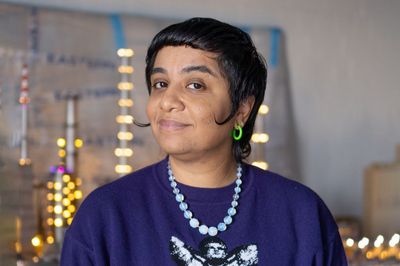
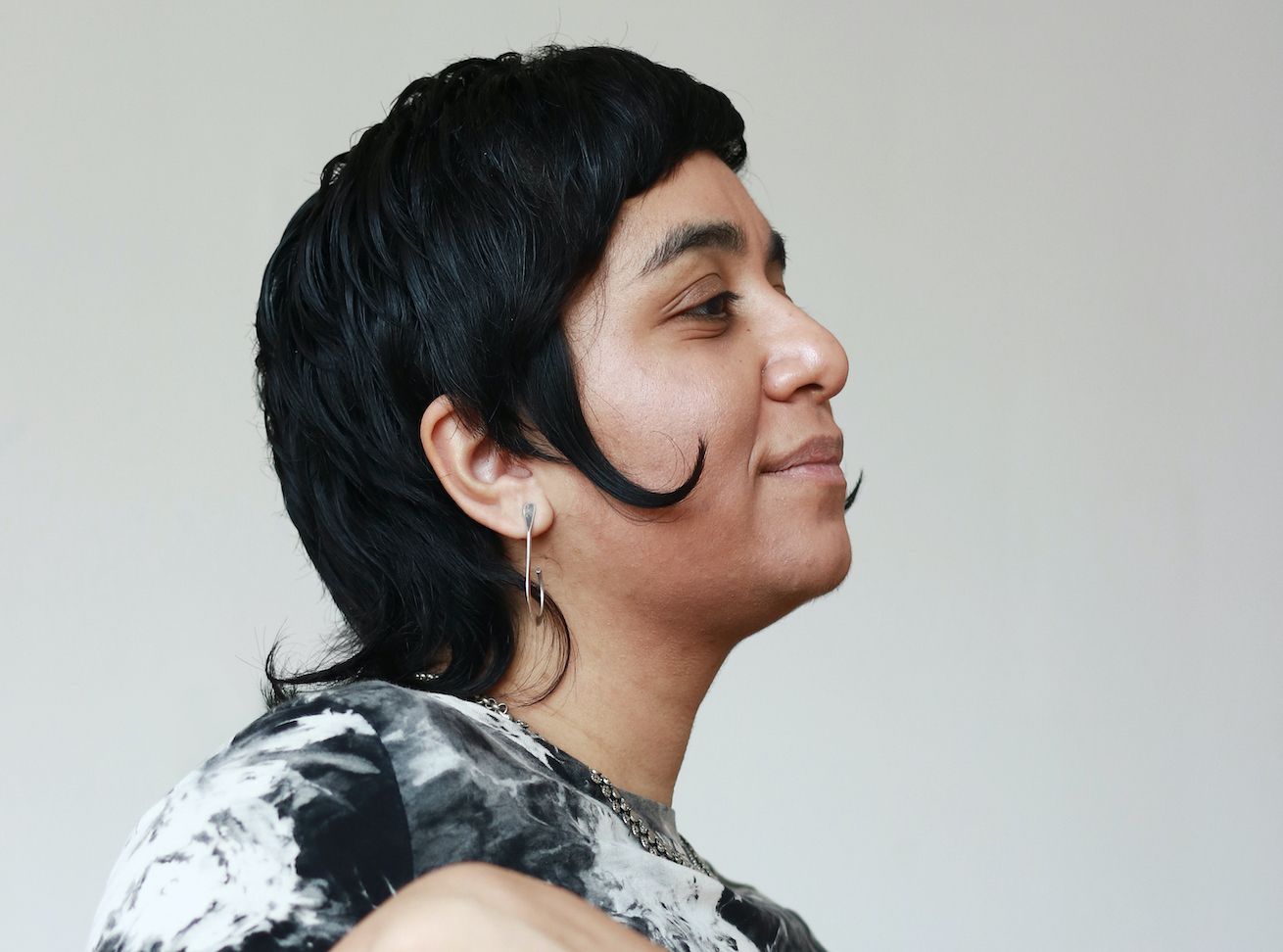
Monira Al Qadiri, a Kuwaiti artist living and working in Berlin, produces research-based work that focuses on the aesthetics of sadness in the Middle East, manifesting in poetry, music, art, and religious practices. Her practice explores unconventional gender identities and petrocultures and their possible futures, as well as the suppressed legacies of colonialism.
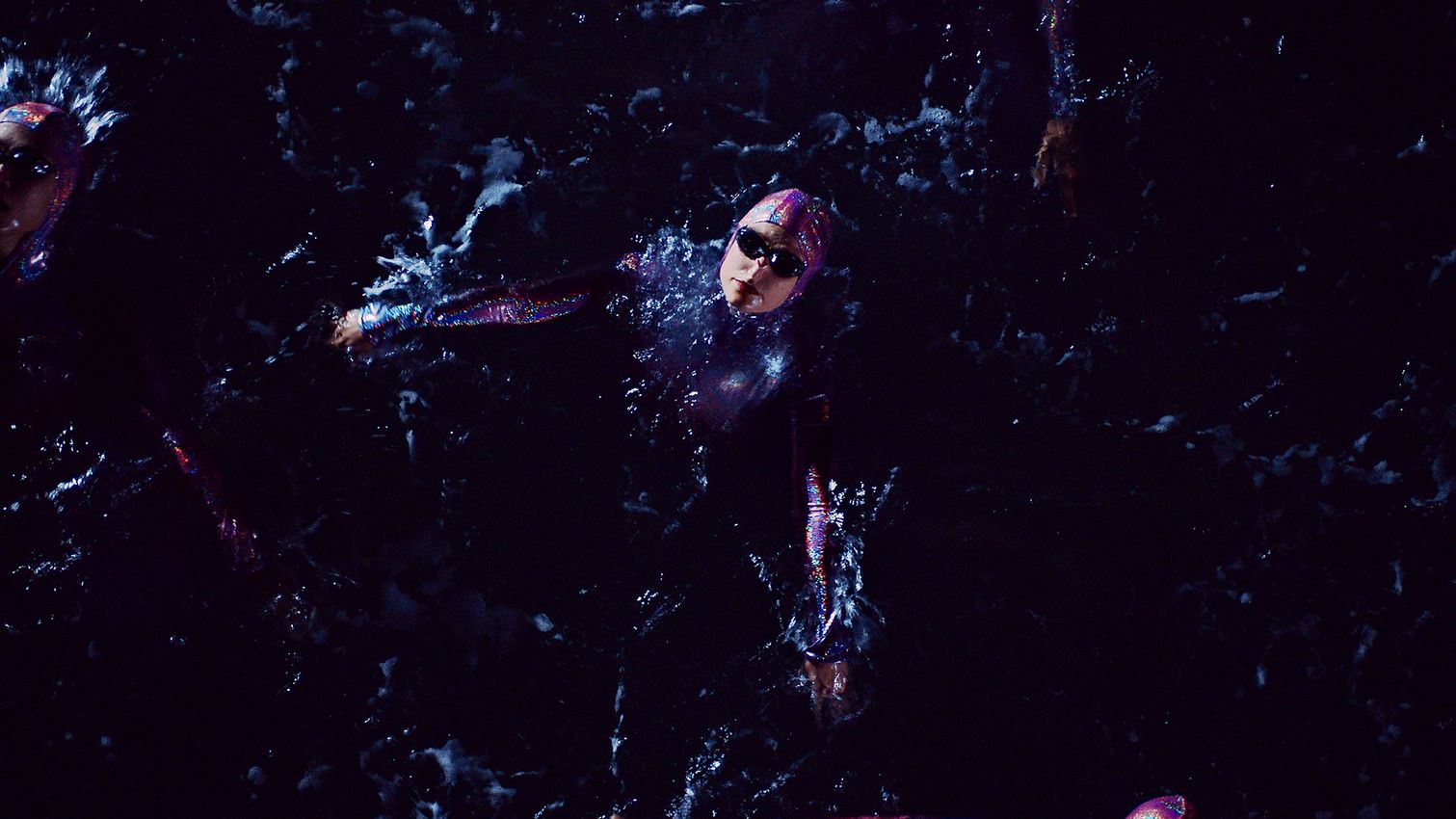
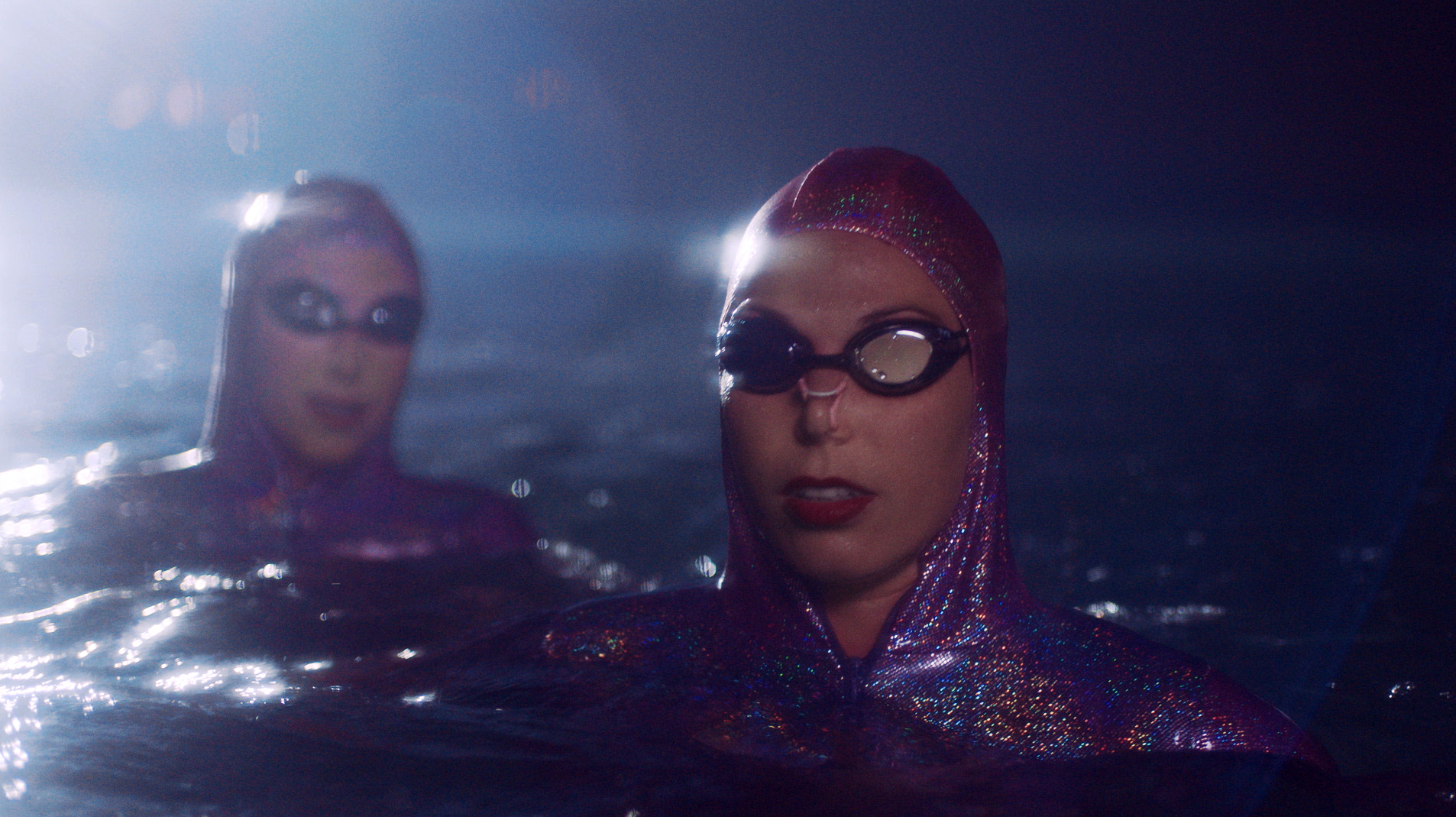
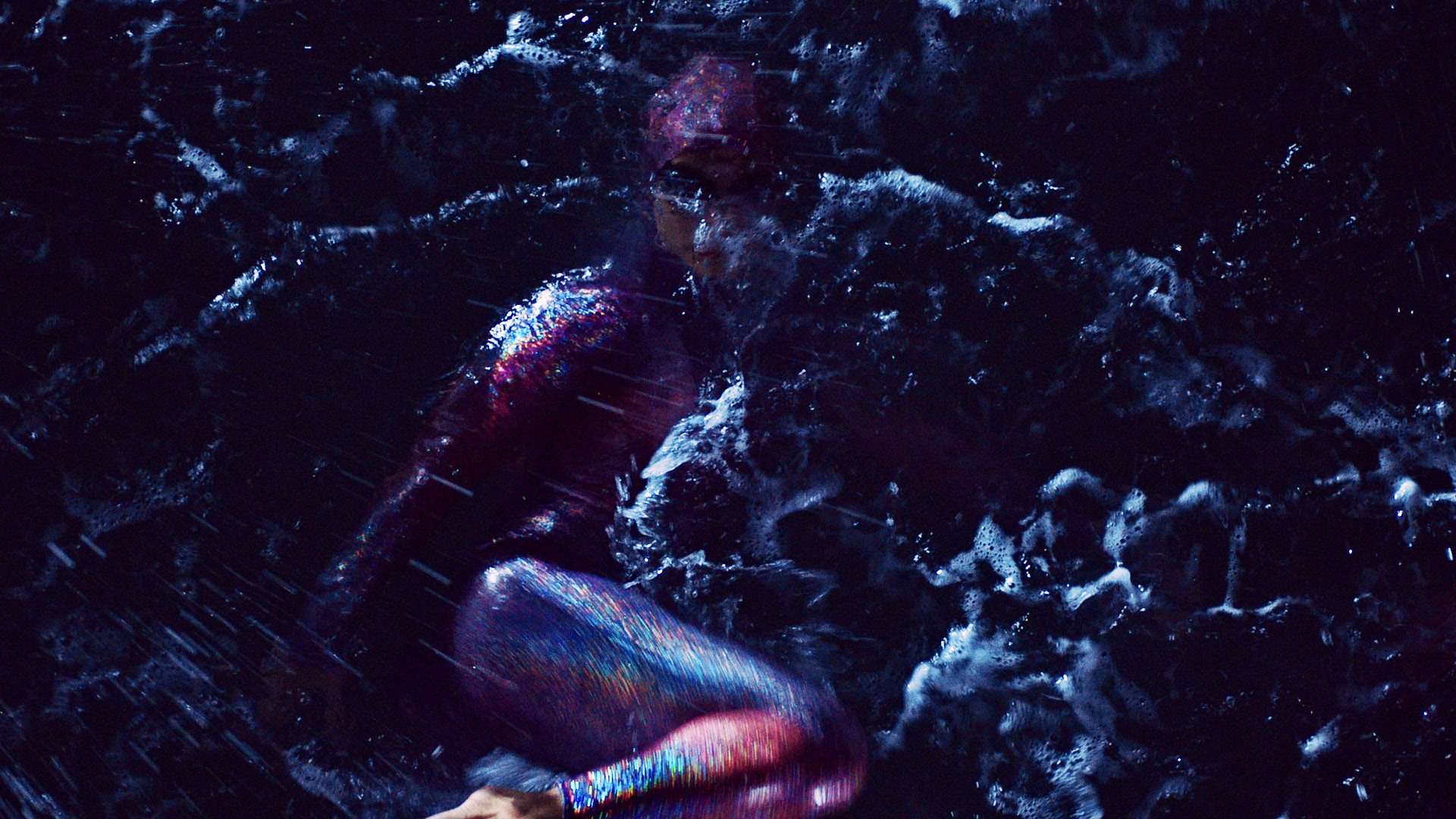
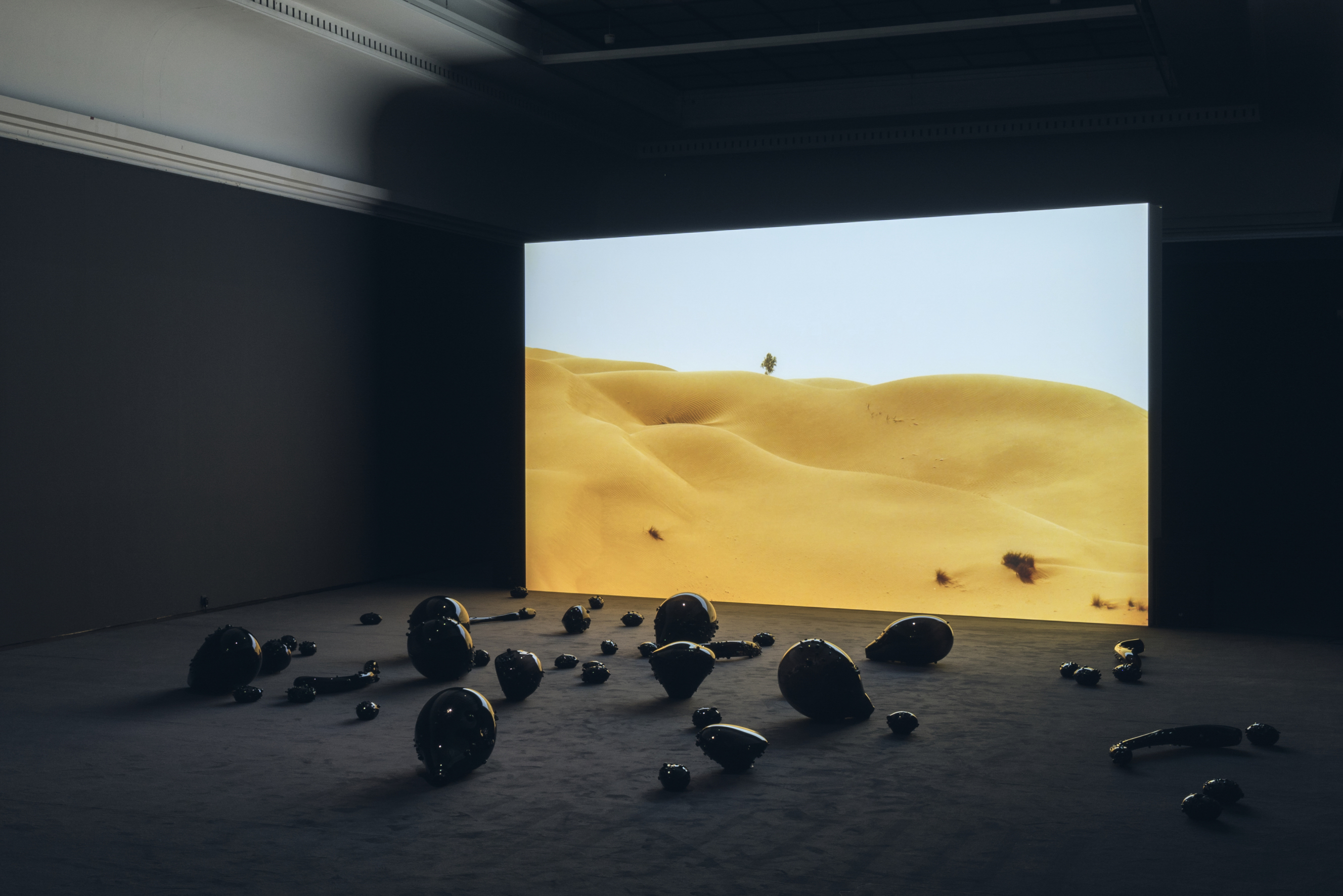
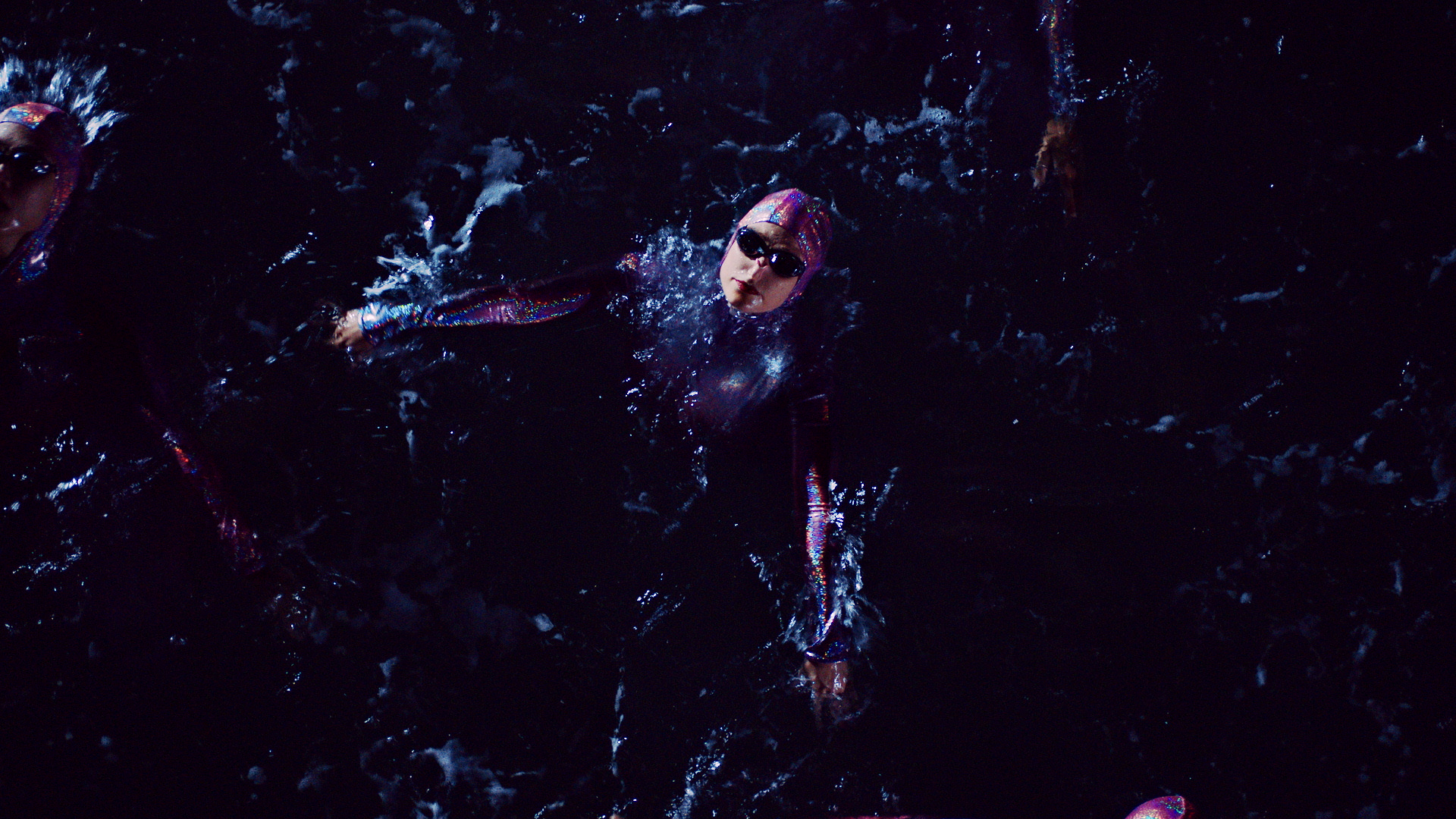
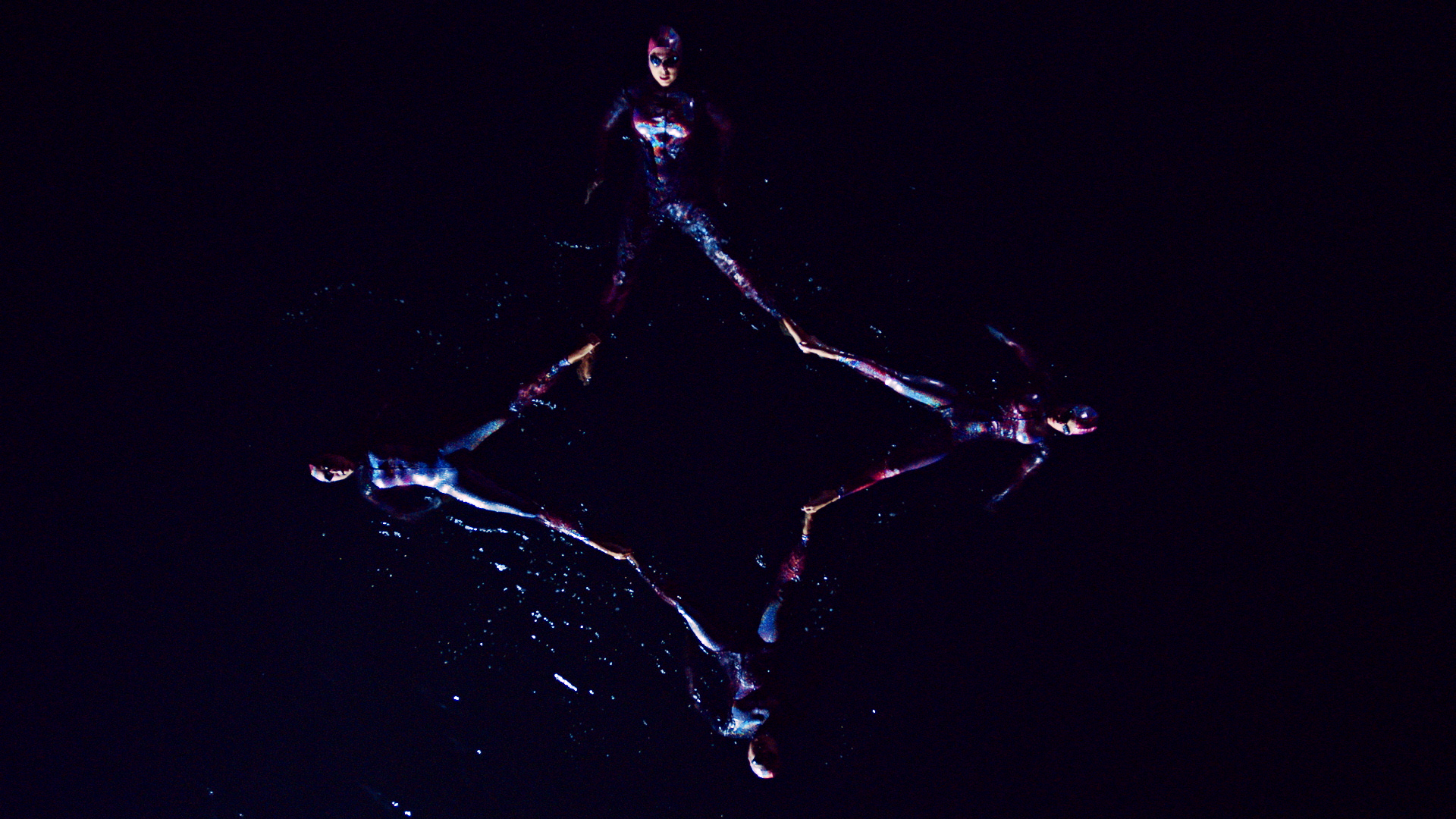
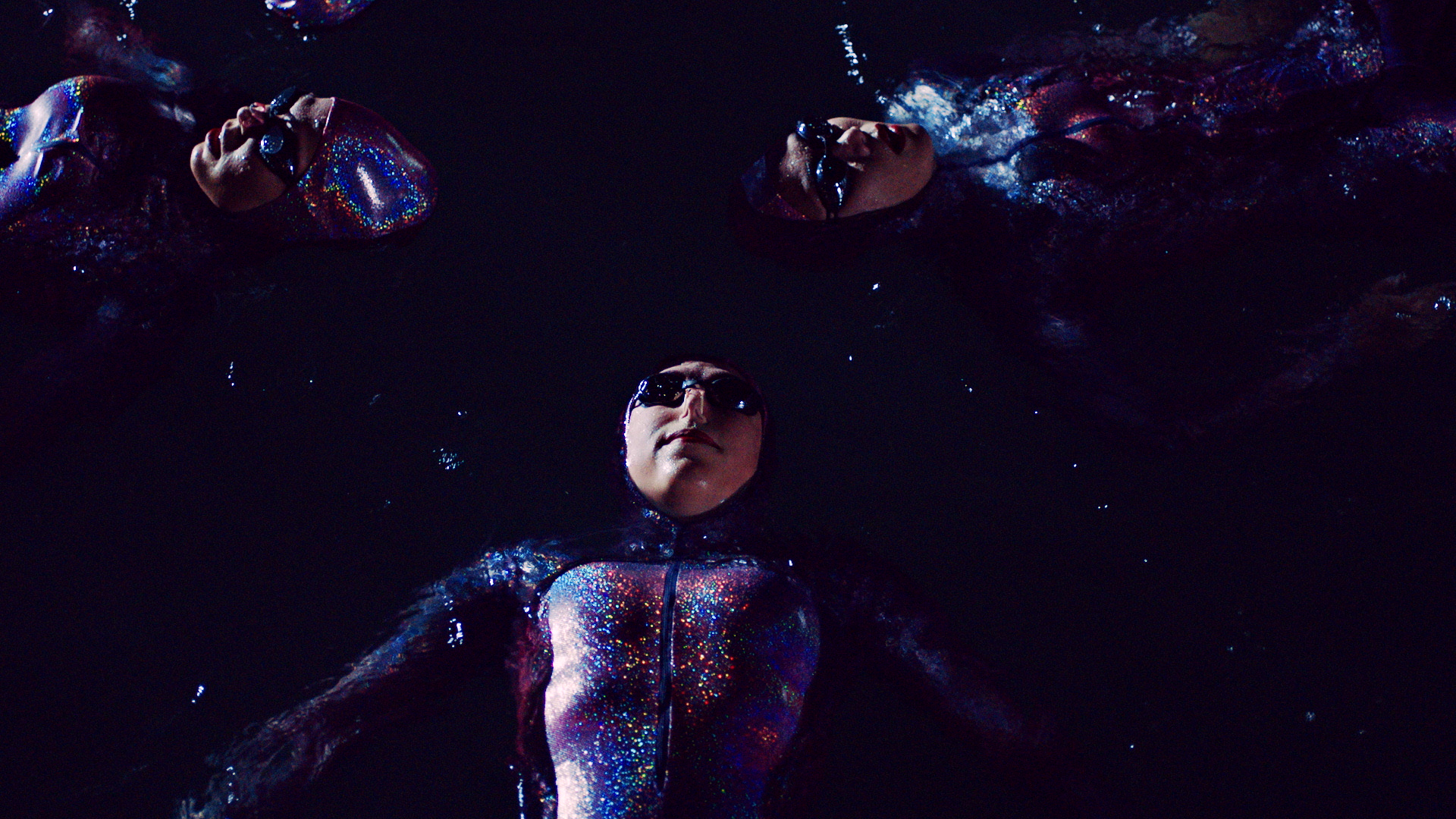
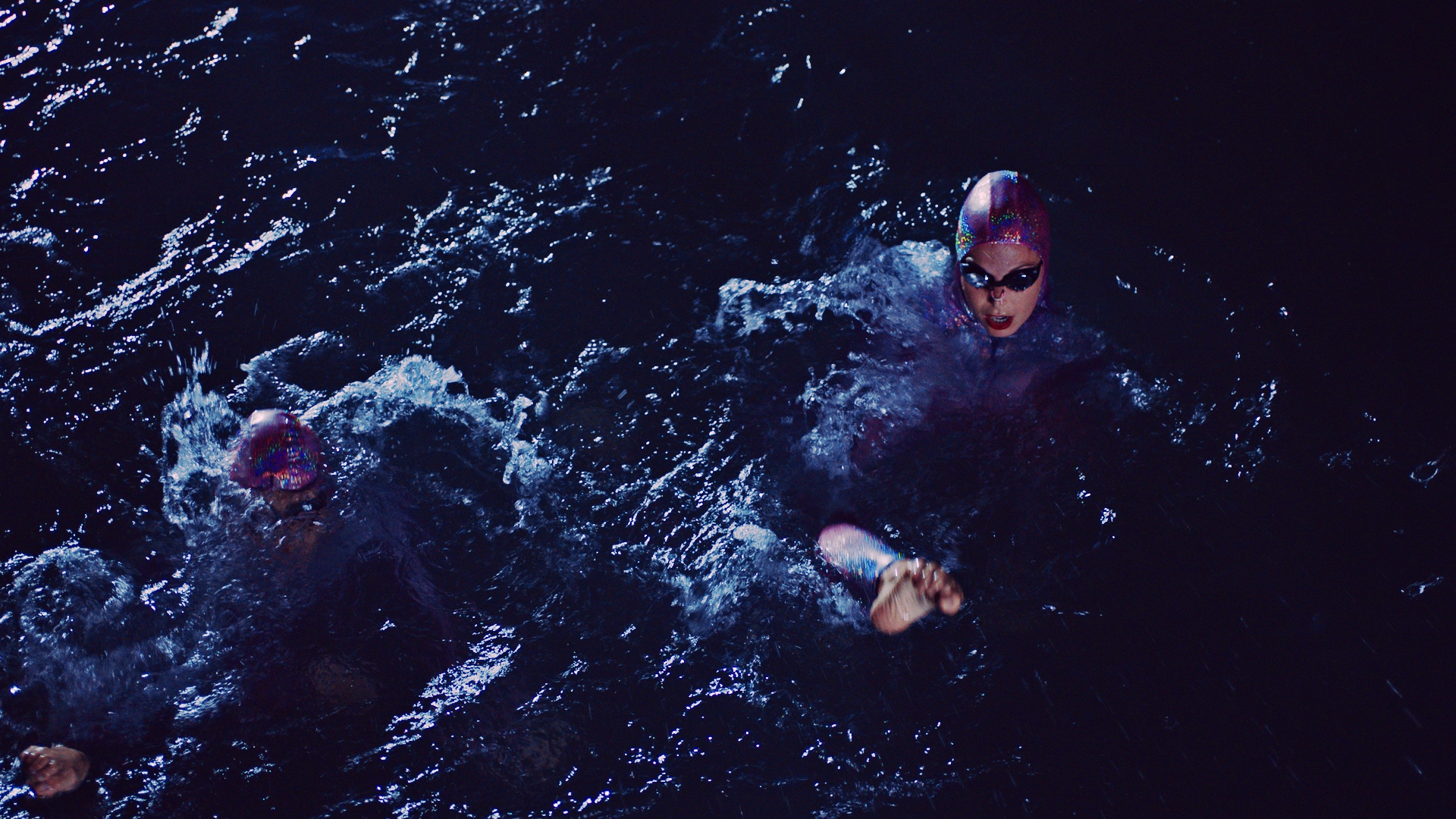
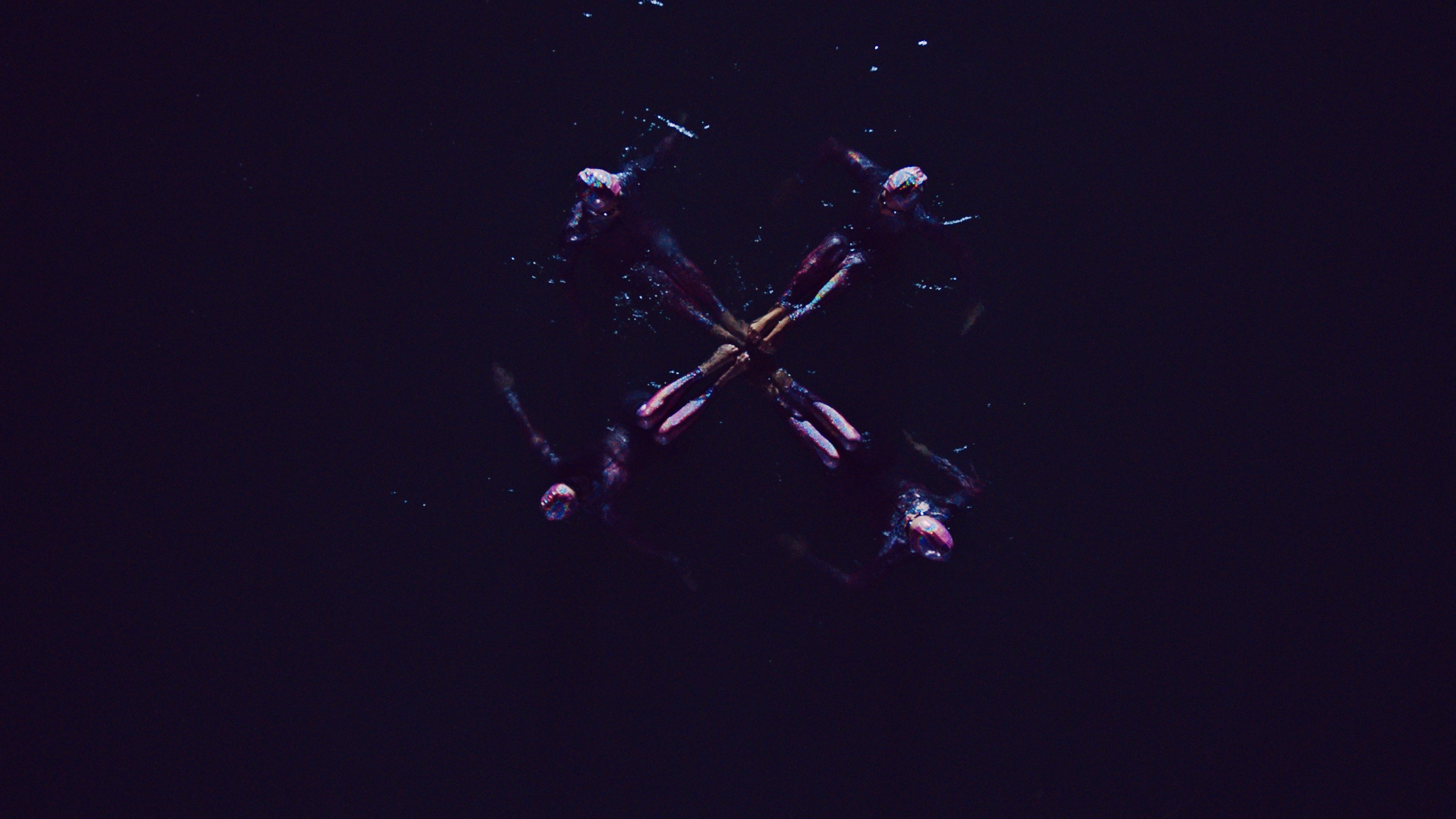
This spring, the Art Gallery of Burlington (AGB) opens the first Canadian solo exhibition of Al Qadiri with an immersive video installation, Diver (2018), curated by Suzanne Carte (1 March–31 May 2021). The work is part of the artist’s ongoing search for historical ties between the pre- and post-oil worlds in Kuwait. It captures the movements of four synchronised swimmers in the night waters, possibly the Gulf, wearing iridescent head-to-toe bodysuits, goggles, and full makeup, and performing a choreographed routine to an early recording of a traditional pearl-diving song.
The weight and beauty of Diver provides an opening for audiences to contemplate their multilayered relationships to the transnational oil industry and fossil fuel consumption. Canada is a country founded on natural resources and bound in extractive capitalism, with the oil and gas sector being flashpoints for the federal government’s struggle with the oppositional mandates of climate change mitigations, economic resolve, resource development, and reconciliation with Indigenous peoples.
While the work resonates within a Canadian context, the exhibition’s intent is not to conflate the two different histories, or these different lands and people; instead, it means to provide an opportunity for discussion about the complexities of state-supported industries and socio-economic relations of the energy sector with Indigenous self-determination and ecological safeguarding.
Amin Alsaden, a Toronto-based curator and scholar, joined Al Qadiri on 6 February 2021 to discuss their common interests in the global impact of oil, from rapid modernisation and armed conflict, to the representations of Arab oil-producing countries.
This transcript is an edited version of their conversation, which took place online. The discussion underlines the manner in which the artist’s practice reveals complex intersections between a global dependence on fossil fuels, the destruction of the environment and traditional ways of life, and the formation of modern individual and community identities.
MAQ: Yes, basically I grew up inside my mother’s studio. For me and my sisters, fooling around with paints and paper was a substitute for playing. It was our playtime. And my mother never actually taught us how to make art; she would just give us her materials and her studio and let us run amok in there.
So I never actually thought about being or doing anything else. I always want to acknowledge this generational quality of some artists, because sometimes people don’t like to recognise that. It’s very important to me that my mom was a female artist who started practicing in the sixties, and in Kuwait, that’s very rare. Without that environment and that kind of encouragement and inspiration, I don’t think I would be doing what I’m doing today.
MAQ: My parents’ generation experienced both worlds: the pre and post-oil world, which was dirt roads and mud houses in the 1950s, and then suddenly this oil alien landed. I like to call it an ‘alien’ because it really felt that way.
Then the nation was founded and everything changed. I think the sixties and seventies in Kuwait was a period of optimism and futurama, when everything suddenly seemed possible, and it became an extremely liberal place. It was the golden age of Kuwait.
I didn’t experience that transformation. They moved back in 1983, a few months after I was born. The eighties was also an interesting, very strange, polarised time, where suddenly there was this wave of religious conservatism overtaking the country. There was the war between Iraq and Iran, which also really polarised a lot of people, because Kuwait is a very mixed bowl. Sometimes I call it a mini America. There are people from everywhere, ethnically speaking. It was a port town.
After the war in 1991, that’s where my period of consciousness as a person and as an artist came to be, which was a time of political and social paralysis in the country.
MAQ: Yes. I call myself a post-oil baby. I only know the glitzy, fancy, futuristic Kuwait. I don’t know the old Kuwait. It’s always advertised to us as our history and heritage, but I never thought it was part of my life. It was always this foreign, exotic, strange, fictional place.
MAQ: Yes, exactly.
MAQ: My dad said we had to stay, so we stayed. Both my parents really love their country. I was seven years old and my sister Fatima Al Qadiri, who is a well-known musician now, was nine.
As a child, you don’t really have a clear sense of morality. You can’t fully understand the world around you. Your vision of life is quite limited. So for us in the beginning, it was really almost fun. There was no school, so we just got to stay at home.
Obviously my parents did a very good job of shielding us from the realities around us. My mom just let us stay in her studio the whole time, giving us bounties of her art materials. I think we were just very creative with that time. It just felt like a giant video game for me, as if we were the good guys, and those were the bad guys.
I had a very simplistic worldview, whereas my older sister, who was 15 at the time, is still very traumatised. It’s one of the darkest periods of her life. I had a completely different experience just because of my age. It’s interesting how you always think children in war zones are having the worst time, but actually, depending on the situation, people who understand what’s happening are suffering a lot more.
MAQ: Yes that’s true. My family thought I couldn’t handle the news that my father was taken as a prisoner of war, so they lied to me. They told me he had gone to Europe for a work trip. I was the only one who didn’t know what happened. So when he came back, everybody was in tears and crying except me. I was like, ‘Oh, Daddy’s back from Europe.’ It’s strange how people shield you and protect you in this way.
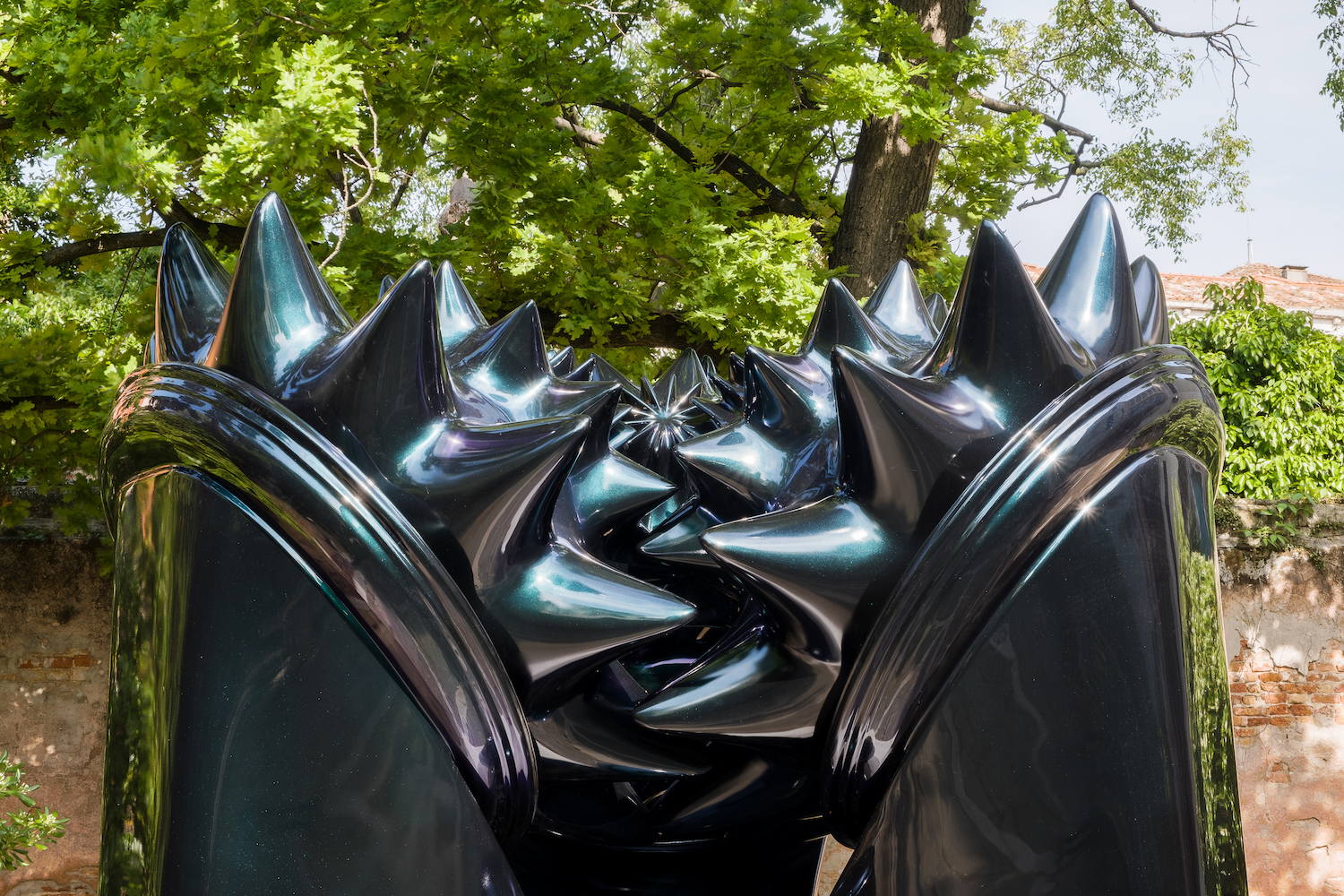
At the same time, me and my sister were always making these very violent drawings of soldiers and us winning against the enemy. My mother also thought that that would really get us in trouble if somebody saw them, because inspections of people in their homes took place regularly. The soldiers would come in and check houses for weapons, hiding resistance fighters and the like. So she hid all our drawings in the AC unit. We actually still have those drawings. They’re very sweet.
“I think that, in the Gulf especially, we’re in this endless loop of knowing the reality of oil and that it’s not going to last, but that the wealth it brings is always feeding this illusion of being grand and important and powerful.”
MAQ: Yes. I used to watch these Japanese cartoons dubbed in Arabic. There were tapes of them at our house and I started getting obsessed with them during the war, I think to also escape what was happening.
I decided at that moment that I was going to go to this place. I just imagined that that cartoon was real and that somewhere that world, that life, existed. So in my naivety, I started teaching myself Japanese and became immersed in the culture, and I got a scholarship to study there when I was 16. So I went there by myself in 1999.
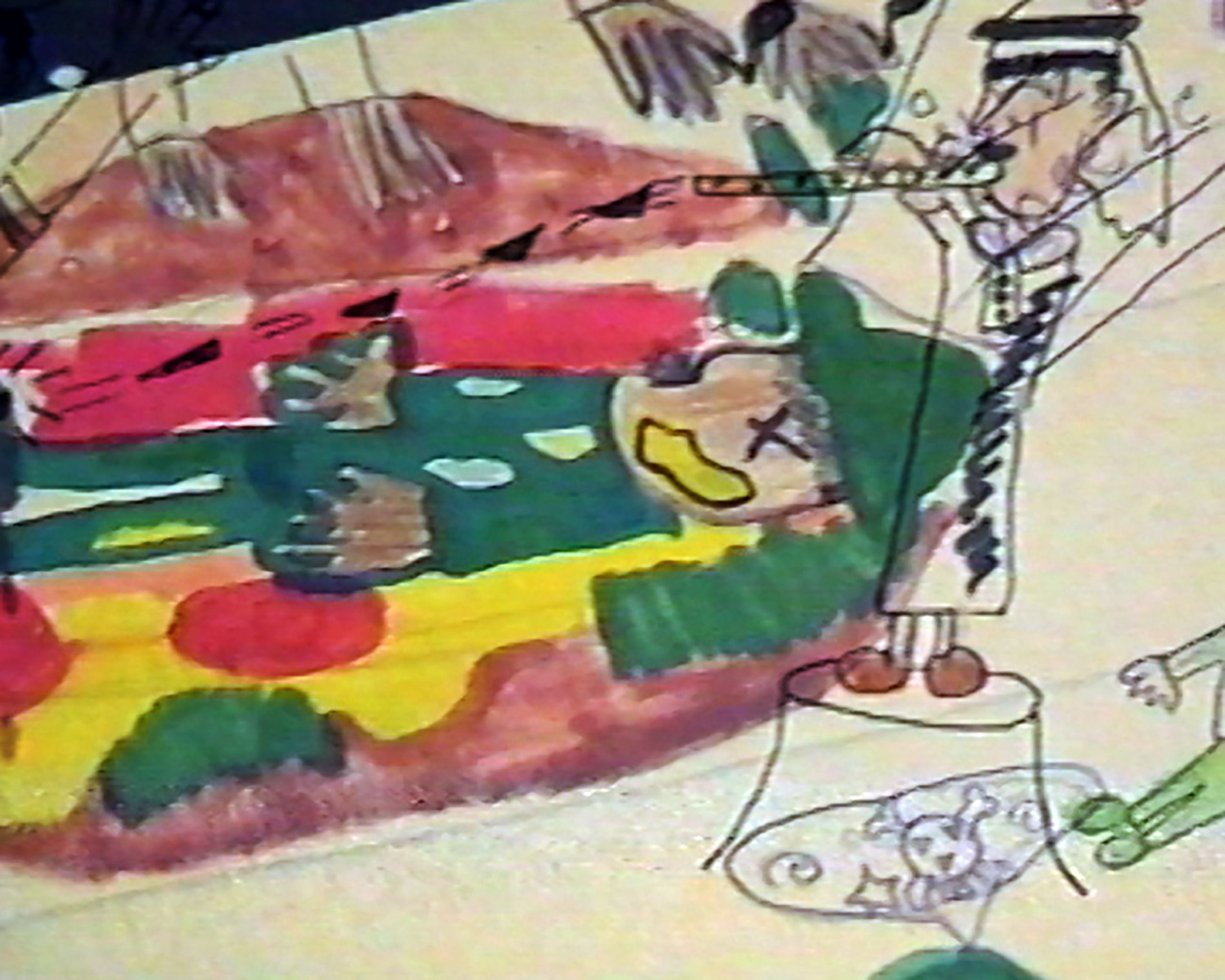
Obviously it was very disappointing, because the world was not a cartoon. I immediately became disinterested in cartoons. I discovered later that maybe it wasn’t the cartoons that were really influencing me more than the Arabic voice acting. That’s another project that I worked on later, called Feeling Dubbing. It’s a theatre piece.
Japan was very interesting. For ten years, I really forced myself to be in love with it. But after ten years you also start to see the dark underbelly of Japanese society, and the hyper-capitalist culture that exists. That was very harsh.
Even though I come from an undemocratic monarchy, I felt that there’s better social mobility in Kuwait, where you’re guaranteed healthcare and school. In Japan there was this very cruel reality of total submission to corporate life, and if you exist outside of it, you cannot really be accepted by society, unless you are extremely successful. Especially for young, budding artists, it was a difficult place to be, so I decided to leave and came back to Kuwait in 2010, right before the Arab Spring.
MAQ: When I came back to Kuwait after Japan, I already felt very much like an alien. I don’t belong in Japan and I don’t belong in Kuwait. I don’t belong anywhere, actually. I’m this mutant, I call myself.
So I wanted to start trying to find ways to connect myself to my ancestors, because in Japan that’s very important. There’s almost a cult of ancestor worship going on there. In the Arab world, that concept really didn’t exist. I started thinking about it a lot. Who is my grandfather? Who is my great-grandfather? Those kinds of questions emerged.
My grandfather, who is my father’s father, Issa Al Qadiri, was a singer on a pearl-diving boat. For me, growing up, I heard all of these stories about this man who would go out to the sea for six months and sing this labour music for the divers. He would have to sing and entertain them so they could keep going, because it was very difficult work.
For me, all of these stories just felt like fiction that somebody had made up, somehow. It was so detached from my life. So I started to try to find radical ways, even aesthetic and formal ways, to connect myself to him. He died before I was born, so I’ve never interacted with him.
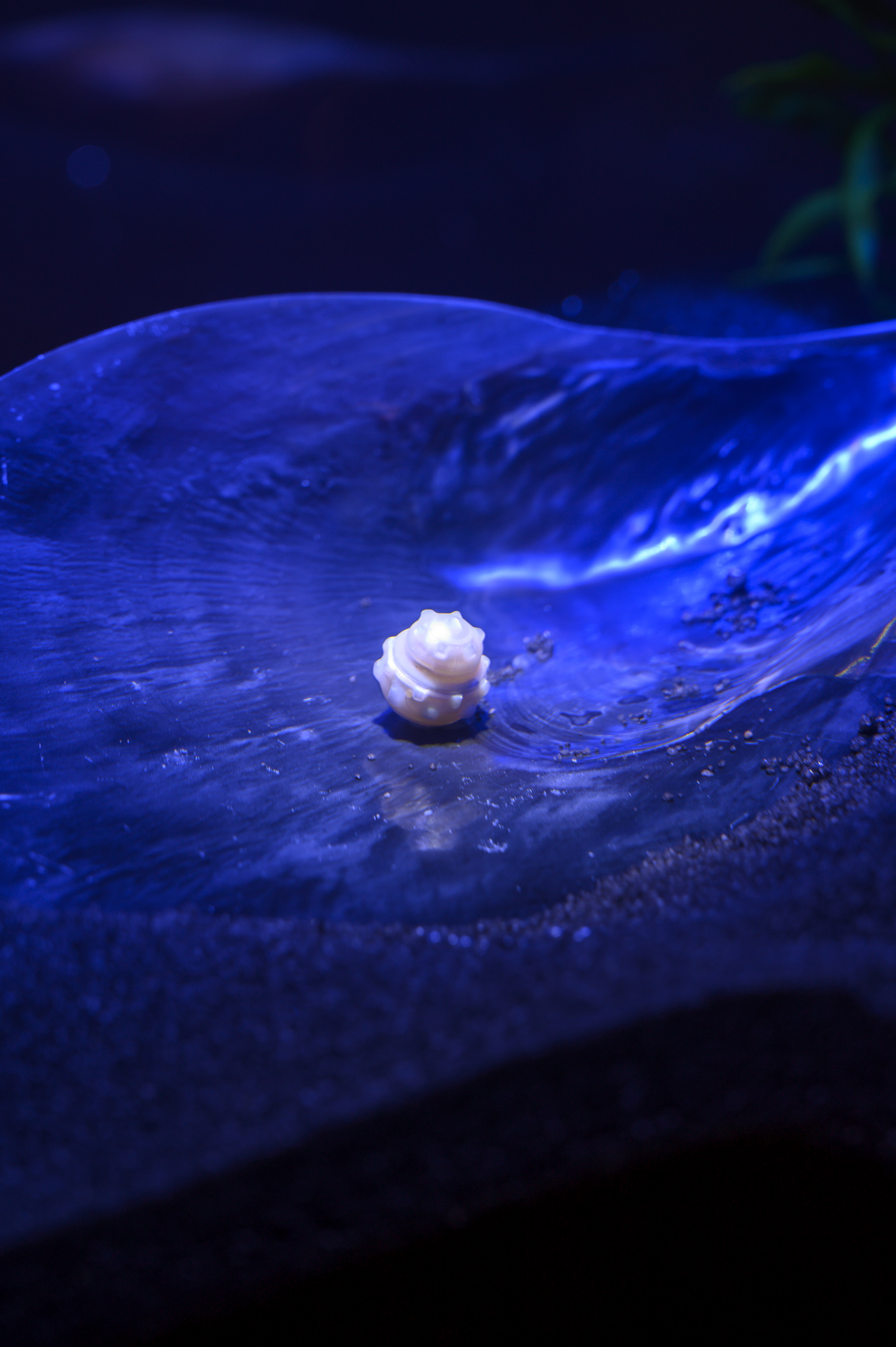
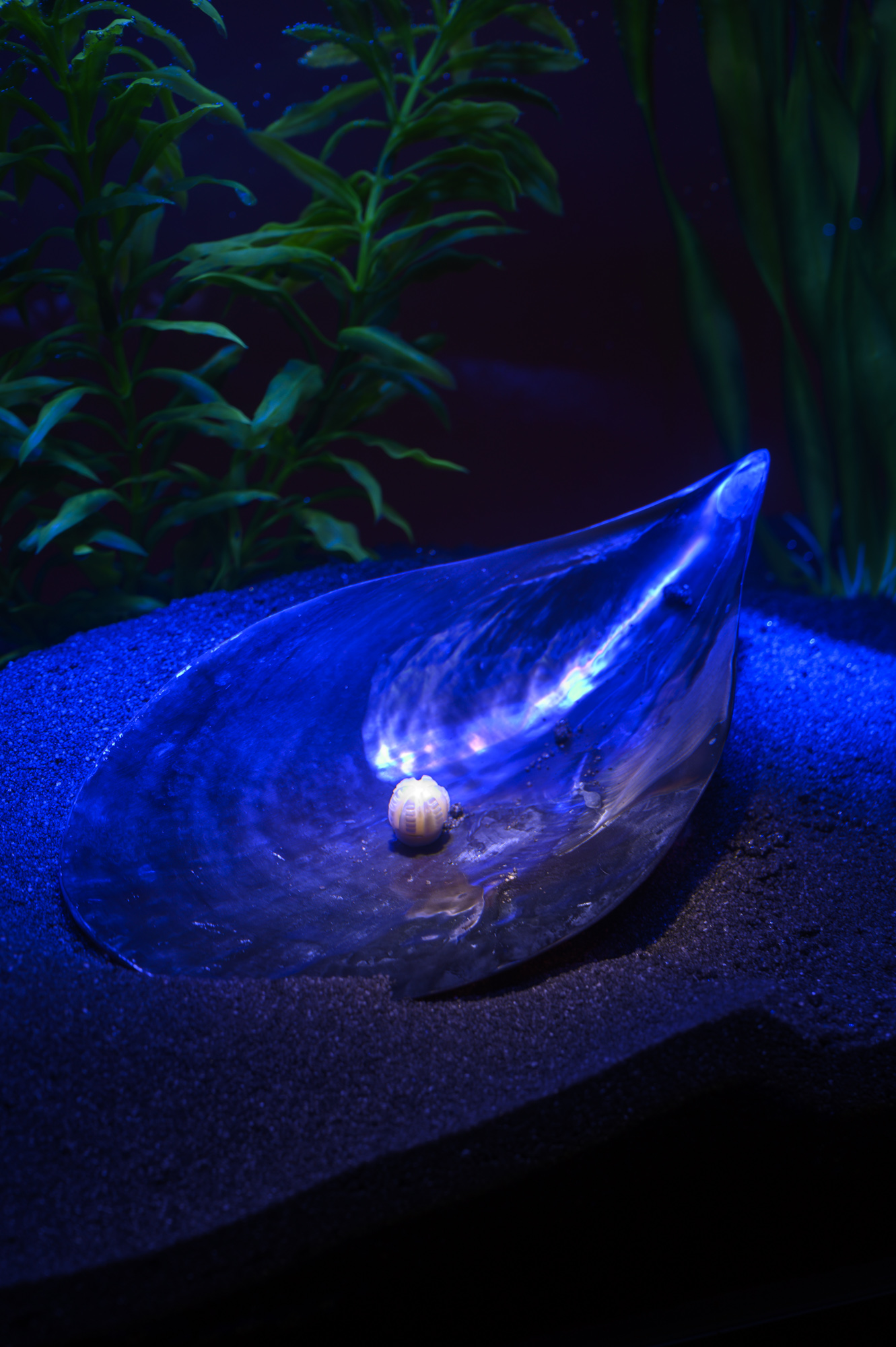
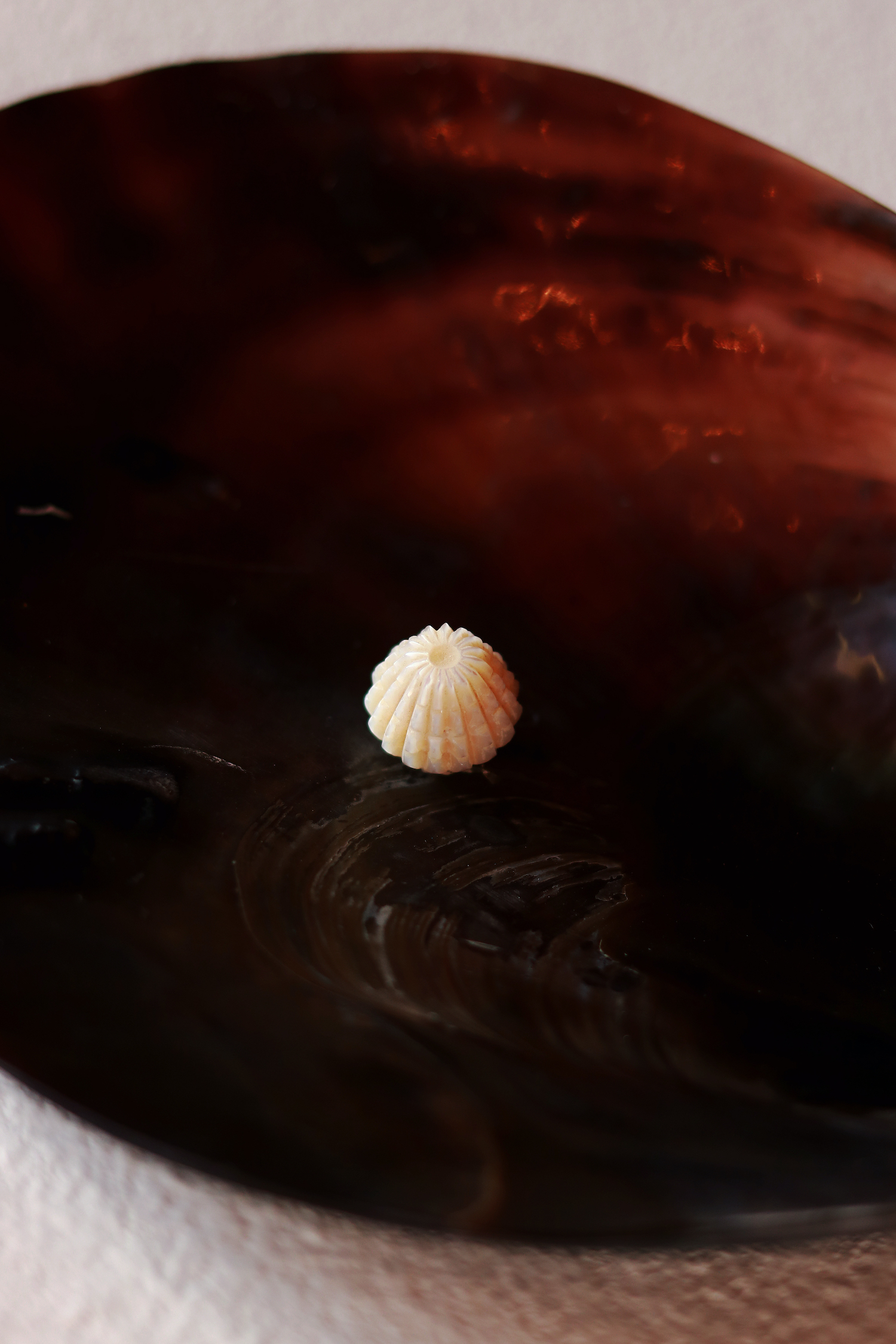
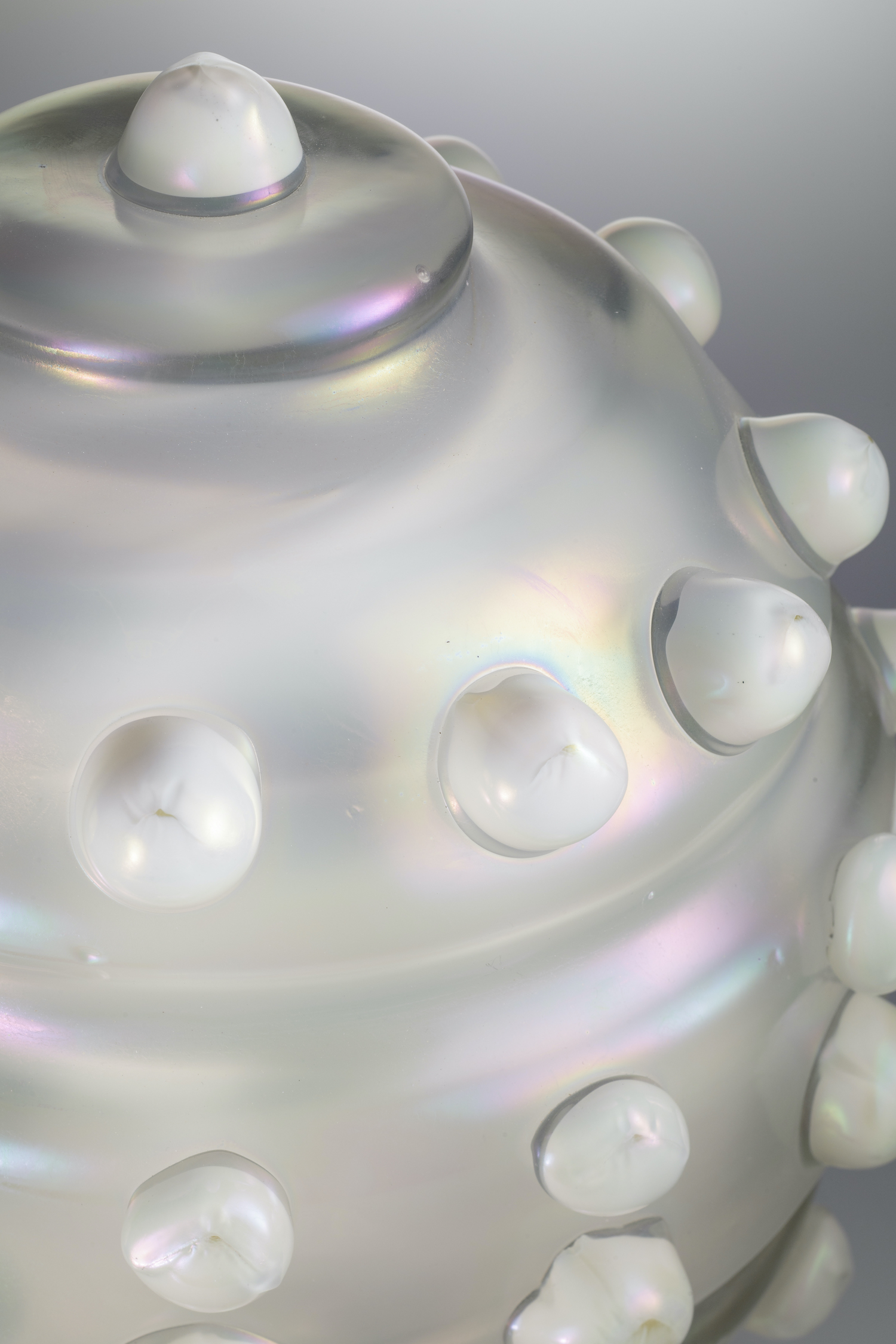
MAQ: I started thinking deeply about these subjects, and the only thing I could find that I thought really formally connected me to him was the colour of pearls. I discovered that the colour of pearls is almost the same as the spectre of the colour of oil. It’s on lighter and darker sides of the spectrum. It’s called dichroic colour—it’s this iridescent, rainbow-like colour. It was kind of an epiphany, that this colour is the colour of this ruptured history, and that maybe after the age of oil, this colour will live on in another form.
So I started making a lot of works around this idea. Diver was the culmination of this research. It’s a work that I tried to make for almost seven years, but nobody understood what I really wanted to do. I just imagined the scene of synchronised swimming in the ocean at night so that the water would look like oil, and that these swimmers would be dressed in dichroic colour bodysuits and they would be choreographed to the songs of the pearl divers.
The recording is actually one from the early 1960s, so it’s very close to the real ones. It’s very guttural. There’s a lot of screaming. It’s very different to the pearl-diving songs that are recreated now. Visually, it’s a completely artificial scene.
I wanted to show how our collective ways of accessing history are always artificial. There’s this laborious effort made to try and recreate it. Then it ends up being always wrong, but in a way it’s beautiful that you try to attempt to relive it. So there’s also this beautiful aesthetic quality to the video.
MAQ: Yes, I forgot to mention that before oil, the main industry in the coastal Gulf was pearl-diving. There are historic records that suggest it was going on for almost 2,000 years, and then suddenly this magic potion called oil comes in and the whole industry disappears, because people saw it as being completely unnecessary.
“Oil is a curse and also a miracle.”
The pearl divers didn’t need to suffer for months in the ocean and risk death and disease for very little income when they could get a nice job, since the state has oil wealth now. It just naturally disappeared, and very quickly also.
The images of pearl-diving and boats and the music is always promoted in a way that they represent our history and identity. But then our lives in this oil economy are completely and utterly detached from that world. So there is this kind of cognitive dissonance there about self-identity. In this work, I also wanted to play a lot on the idea of gender, because the world of pearl-diving is male-dominated.
MAQ: Yes, exactly.
MAQ: I come from a very patriarchal society. When me and my sisters and my mom were stuck at home and my dad was out performing heroic acts during the war, I encountered this strange moment when I thought, ‘In order to be someone powerful in this society, you actually have to be a man.’ So I started cutting my hair very short and cross-dressing.
It was really about power. It wasn’t really about my sexuality or anything, because I was in love with men so much and I adored them to a point that I wanted to be like them. This obsession with my male ancestor comes from this fixation on men and the power that men have.
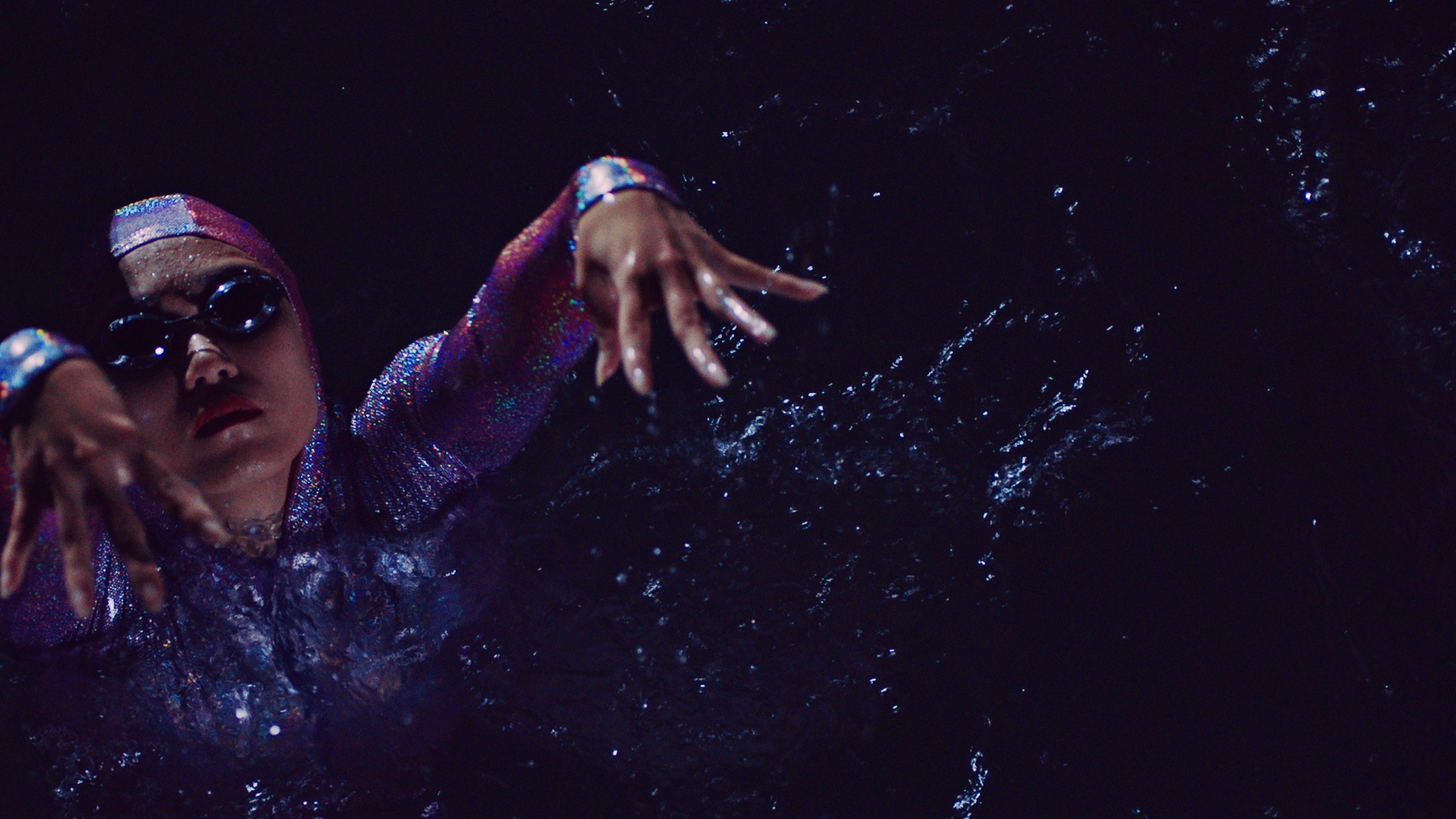
MAQ: Yes, exactly. In this video and many other previous works, I always try to problematise this gender question in a way that it’s always misplaced. The genders are somehow wrong, they’re mismatching, but in a way they work quite naturally.
So I make these music videos where I play the role of a male singer of these very old folk songs and everything is wrong—the costumes are wrong, the makeup is wrong, the beard looks fake. Everything is kind of fake and mismatching and not in the right place. But it works and it gives this kind of beautiful mutant image.
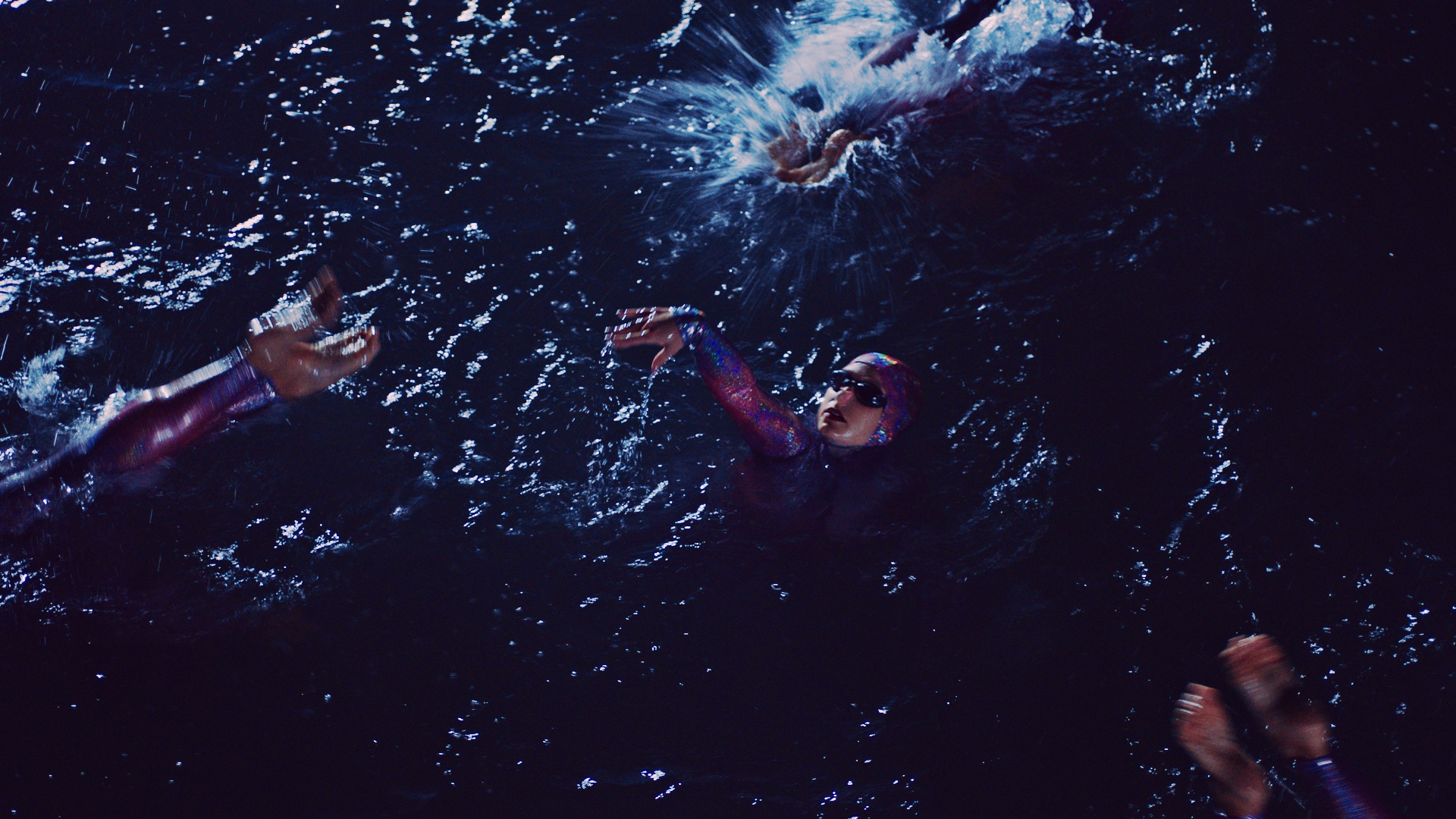
This is also what I tried to do with this work. Synchronised swimming is a very strange water ballet sport that started in the late 19th century, early 20th century, as an all-female sport. There is no place for males in that space. There is something very bizarre about it as well.
I wanted to mould these things together and see how they fit, and they don’t fit, obviously, but once you forget about those realities and leave your misconceptions behind, you can accept this image as working. I wanted to highlight the artificiality of the swimming with this very guttural, visceral sound from the song.
MAQ: The first time I started showing these works, I was really worried that I might get in trouble because they touched on a lot of different taboos. But when I screened the first film, Wa Waila (Oh Torment), in Dubai in 2008, the cinema erupted with laughter.
I was so shocked because I really wanted to create this tragic image, and everybody just assumed it was comedy. And because it’s comedy, everything is accepted. From that moment on, I started understanding that this kind of humour could be also weaponised. All of these things we’re not supposed to mention and talk about, if somebody thinks it’s funny, it’s fine.
But afterwards, of course, my work has been censored many times. Sometimes for completely arbitrary reasons that have nothing to do with the work. But I don’t find it strange. I think it’s interesting, because I think censorship sometimes has to be really creative also. It’s almost like this conspiratorial mentality where you’re imagining this work is about this particular subject in your mind. So I find it amusing. It doesn’t bother me.
MAQ: Yes. I thought that we were living in this kind of version of hell that is written about in the Qur’an. I thought it was really magical. There were black clouds and black rain and our house was black. Obviously I didn’t understand anything about the toxicity of these things, so I just thought it was really amazing.
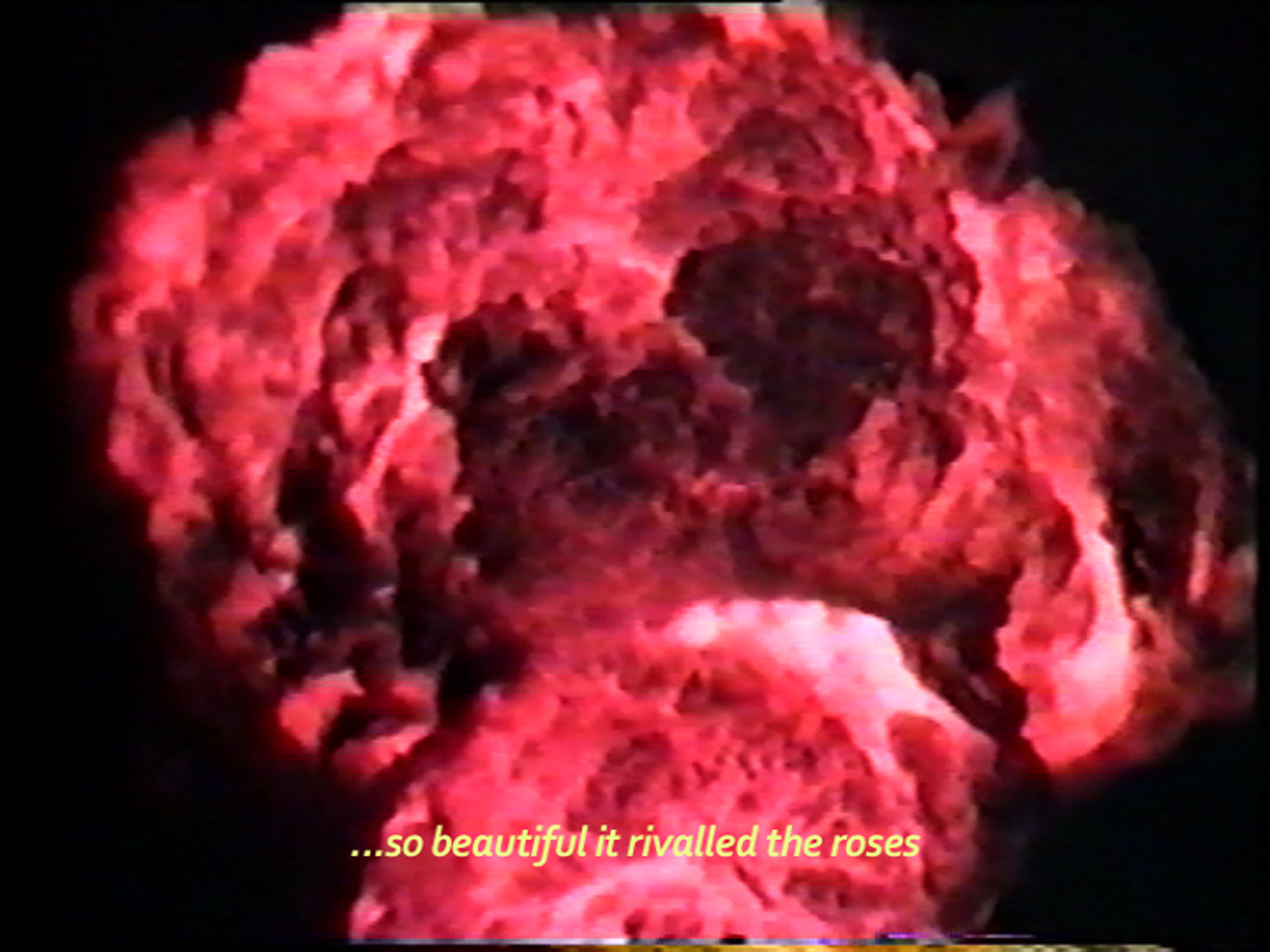
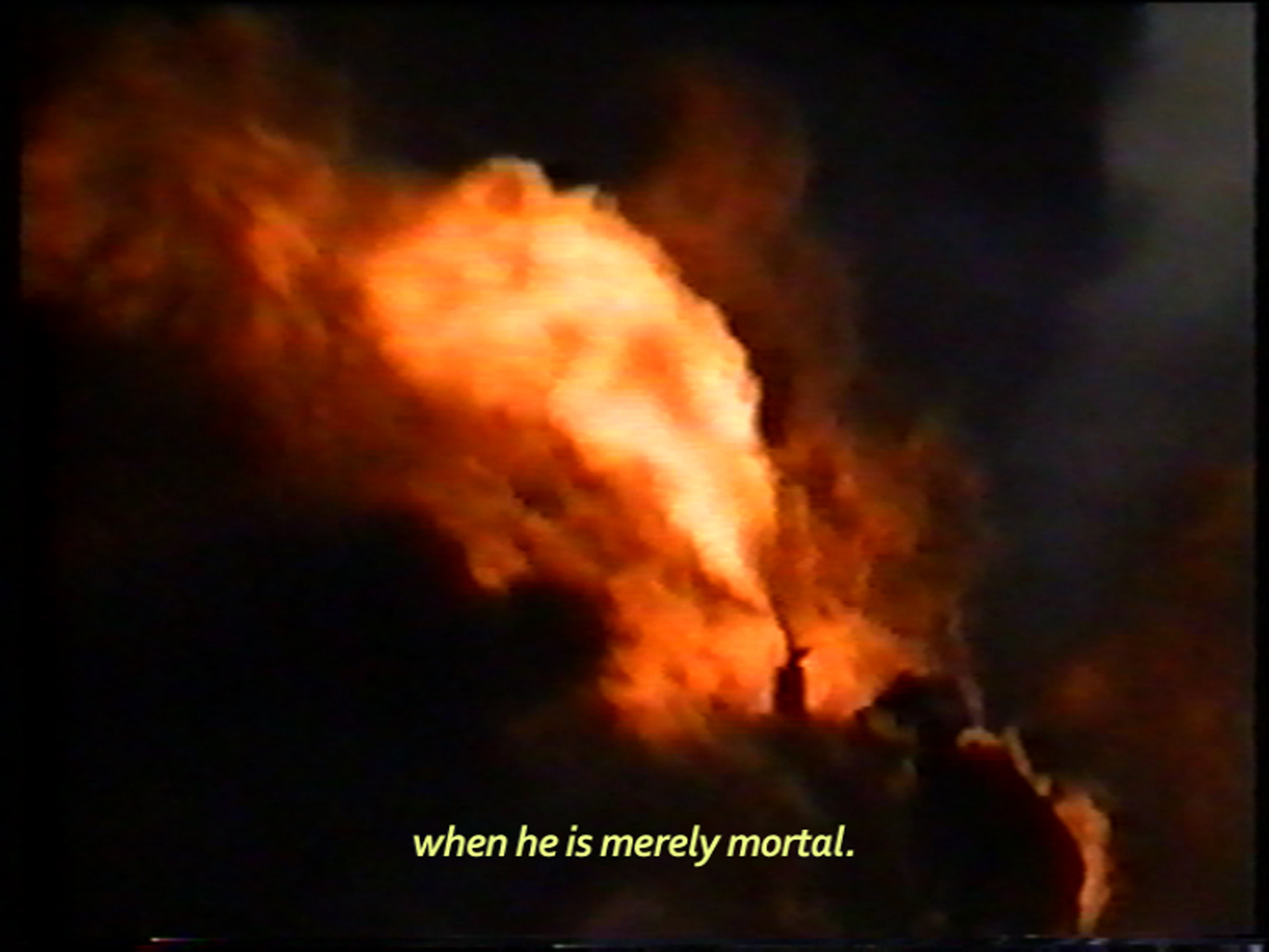
Also, looking at this burning oil was the first time I actually saw oil and had a confrontation with it as a material substance. Until then, especially in the lives of people in the region, in the Gulf especially, the oil industry and the inner workings and the fragile nature of it was concealed from the public. It wasn’t seen as a central tenet of their lives.
Somehow it’s seen as this metaphysical, magic potion that exists in the background and that God bestowed on us to make everybody wealthy. It was a very strange moment when it revealed itself to us as a substance coming out of the earth.
MAQ: Yes, the first work I made about the subject in 2013 was a video called Behind the Sun, which was based on Werner Herzog’s Lessons of Darkness (1992). Werner Herzog came to Kuwait after the war and he made a docufiction film where he was basically filming burning oil fields from a helicopter and reading biblical texts about the apocalypse and Armageddon and there was even a Wagner soundtrack in the background. I don’t know where my parents got this VHS tape.

I just put it on and watched it, and as a kid, I was so angry and offended by this German man making up stories about ‘our’ war. I just couldn’t accept it. I was so angry. Why would someone do this? Later and with time, I grew older and I went to art school and I understood Werner Herzog’s work, what he was trying to do, but whenever I watch that film I go back to being that seven-year-old. I can’t accept it.
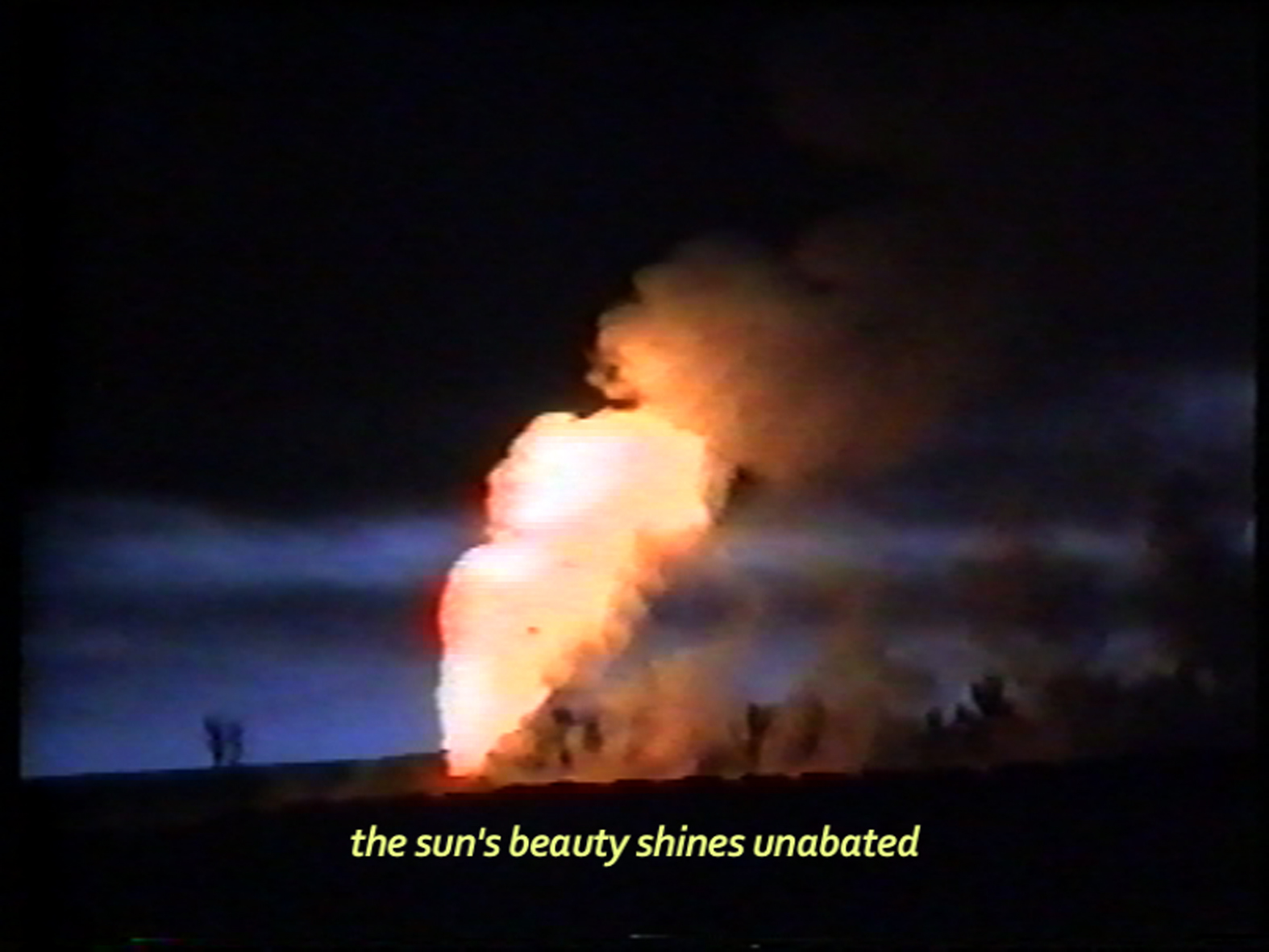
MAQ: Yes. I wanted to reclaim the work and reclaim the context of the work, so I made this film about the burning oil fields, filmed by a photographer Adel Al Yousifi. He gave me these tapes he filmed from the time.
It was really eye-opening. It was a very shaky image of the burning oil filmed up close. It brought me back to that time where I had this sublime impression of it. Then I mixed that in with these Islamic poetry segments from TV. It just became this very strange work.
MAQ: Yes, I showed it at the Berlinale in 2014. I was hoping he would be there.
MAQ: Yes. That’s one of the ideas, but also the main idea about this work, and a lot of sculptural and video pieces and installations that I have done, is that I am preempting the end of oil.
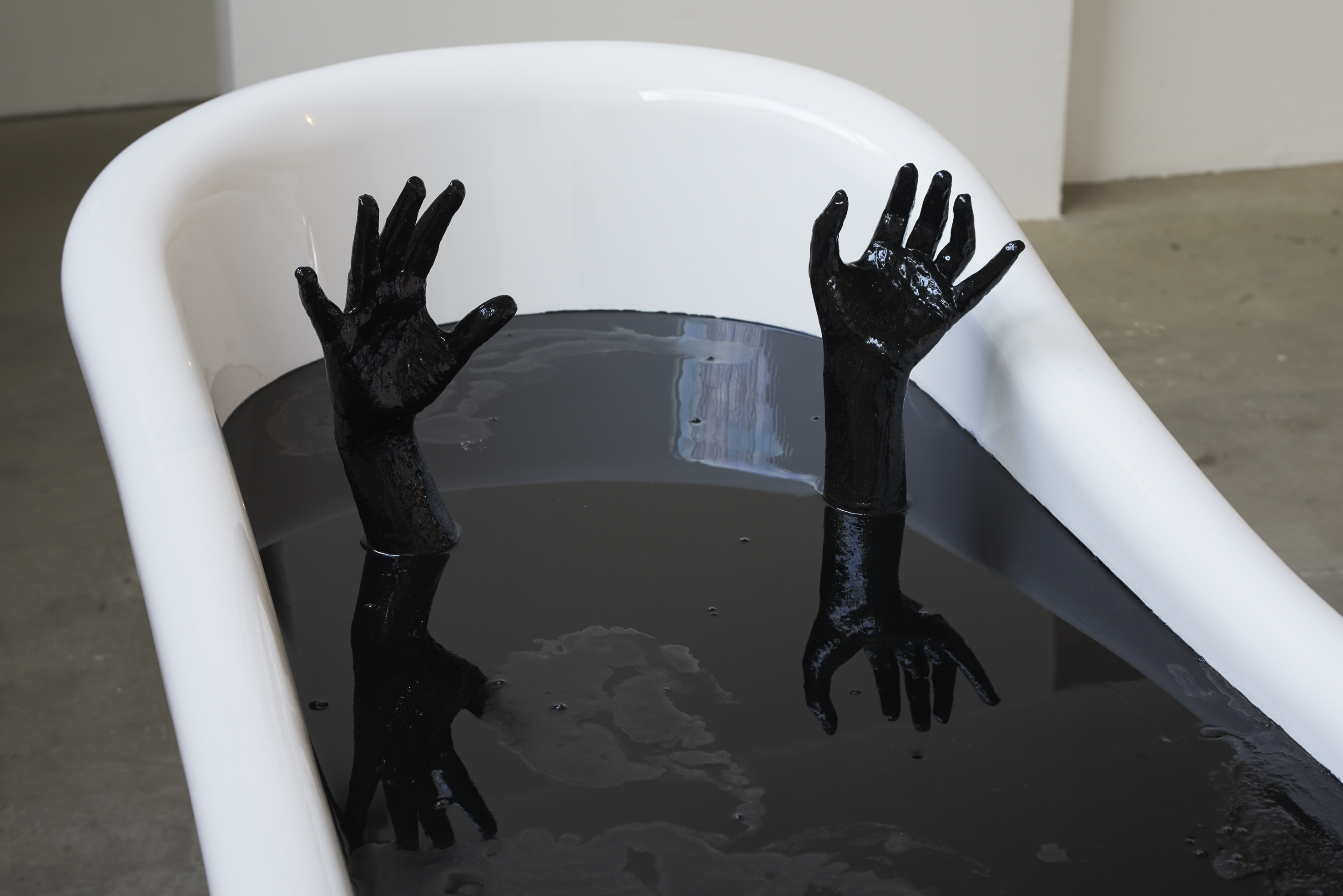
The idea for this work actually comes from a practice in Azerbaijan of taking a bath in oil as a rejuvenating ritual that has existed for centuries, because before oil was used as fuel, it was used a lot for its anti-bacterial qualities.
Camels used to have oil put on their scars and things to kill germs. I thought maybe that oil, after it becomes obsolete as a fuel source or we run out of it, will go back to being this spa treatment material that people swim in in the future, and they have these suits that protect them from the toxicity of it. So it’s also a science-fiction portrayal of the future.
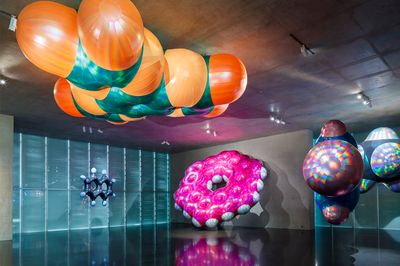
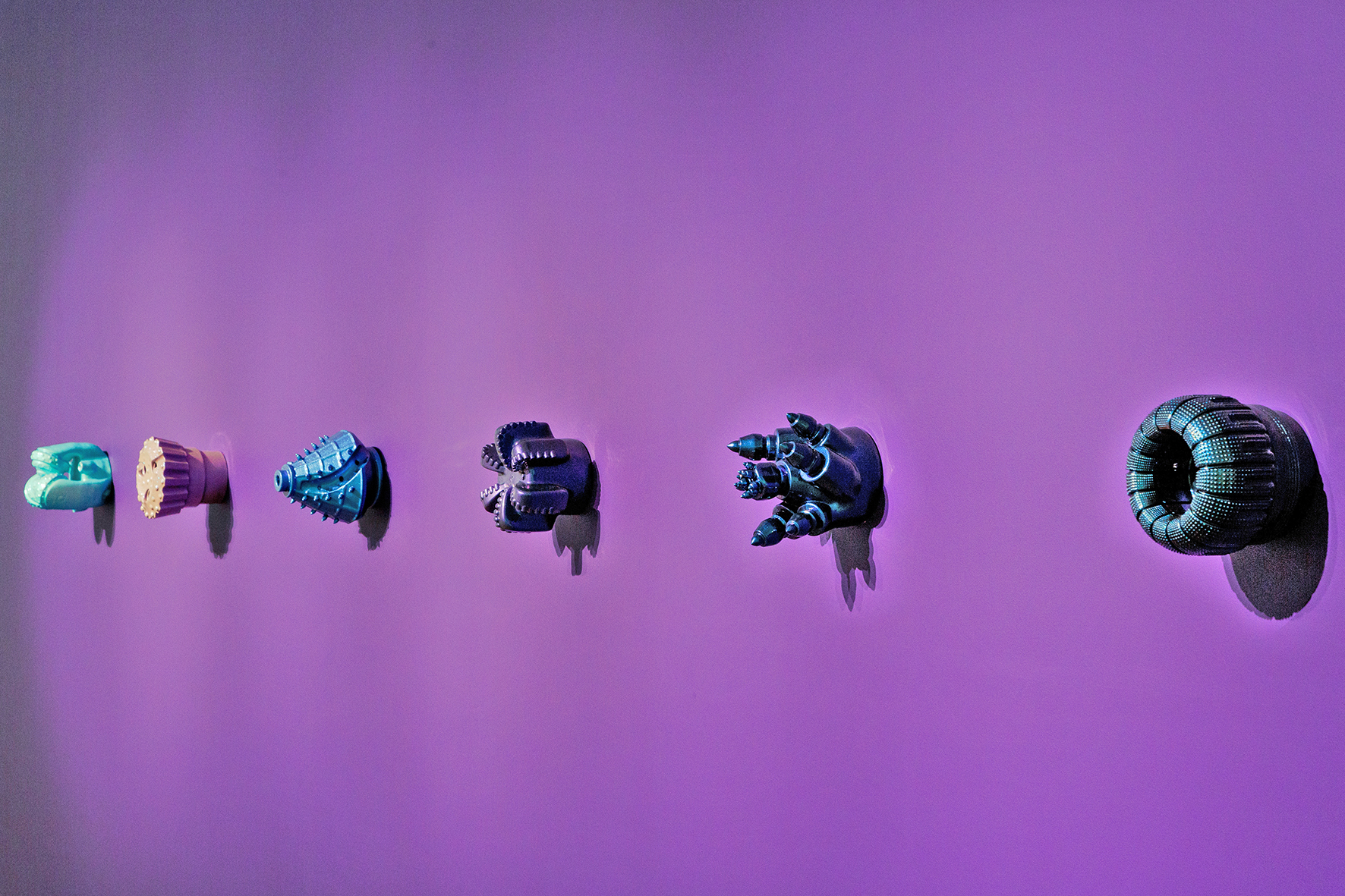
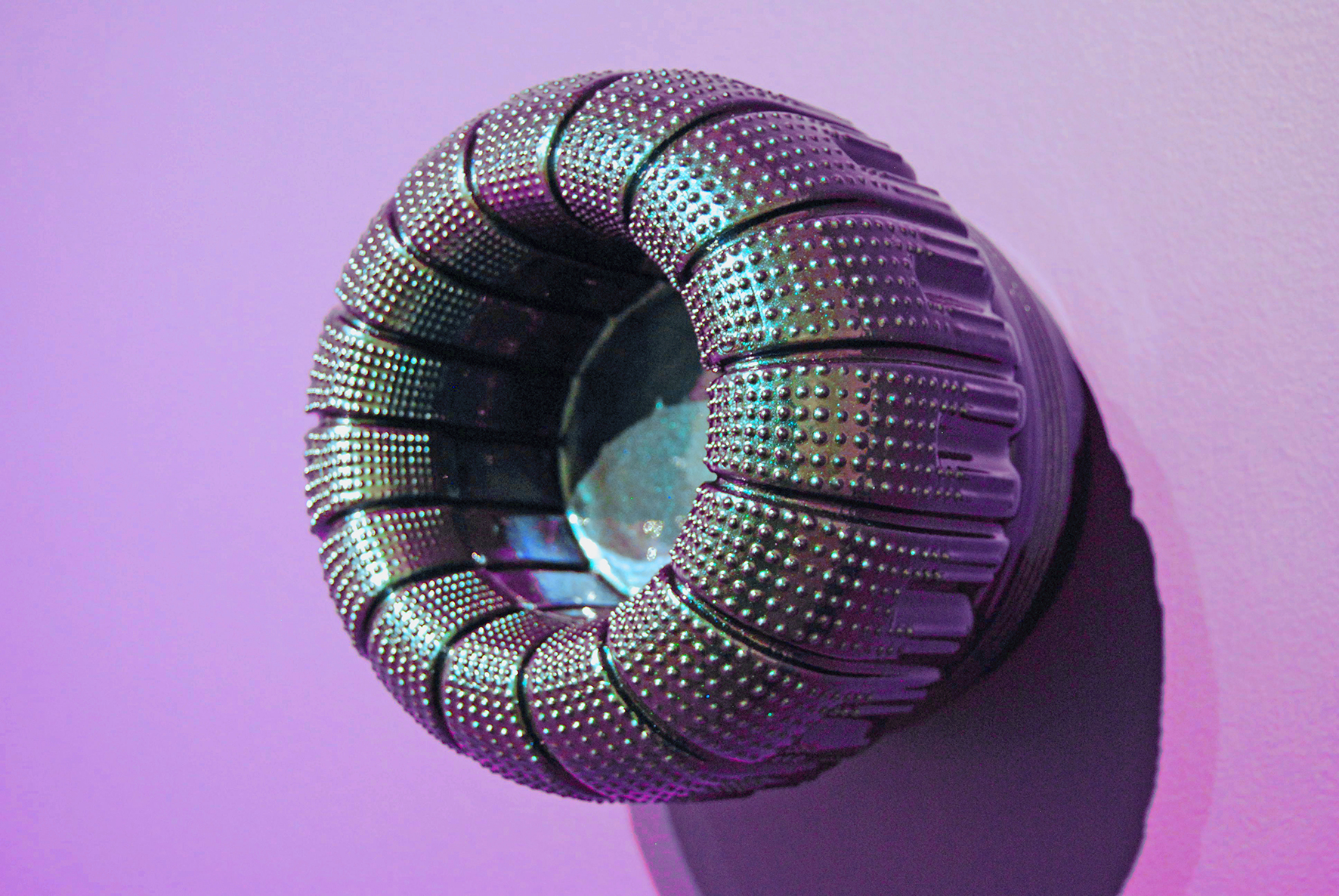
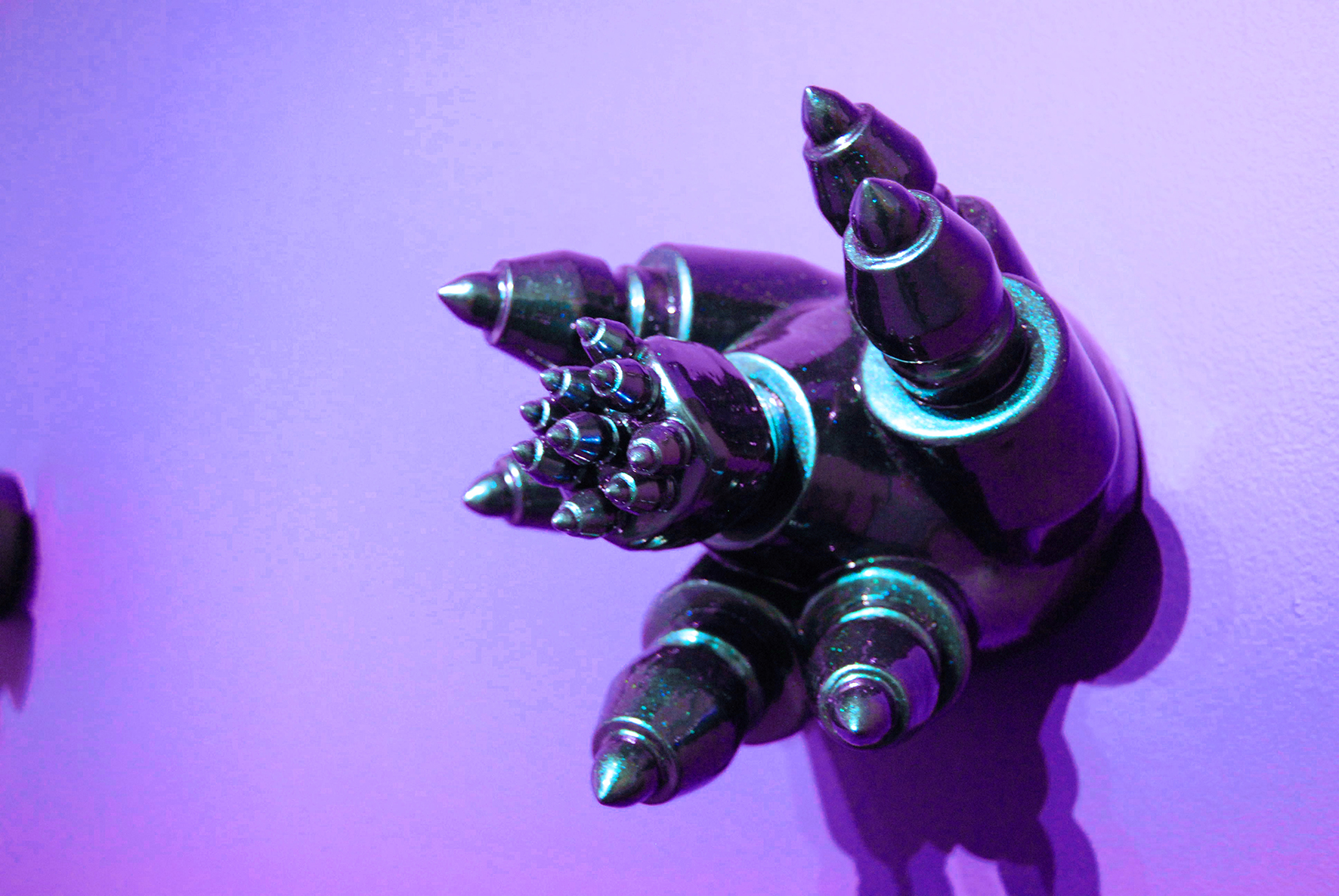
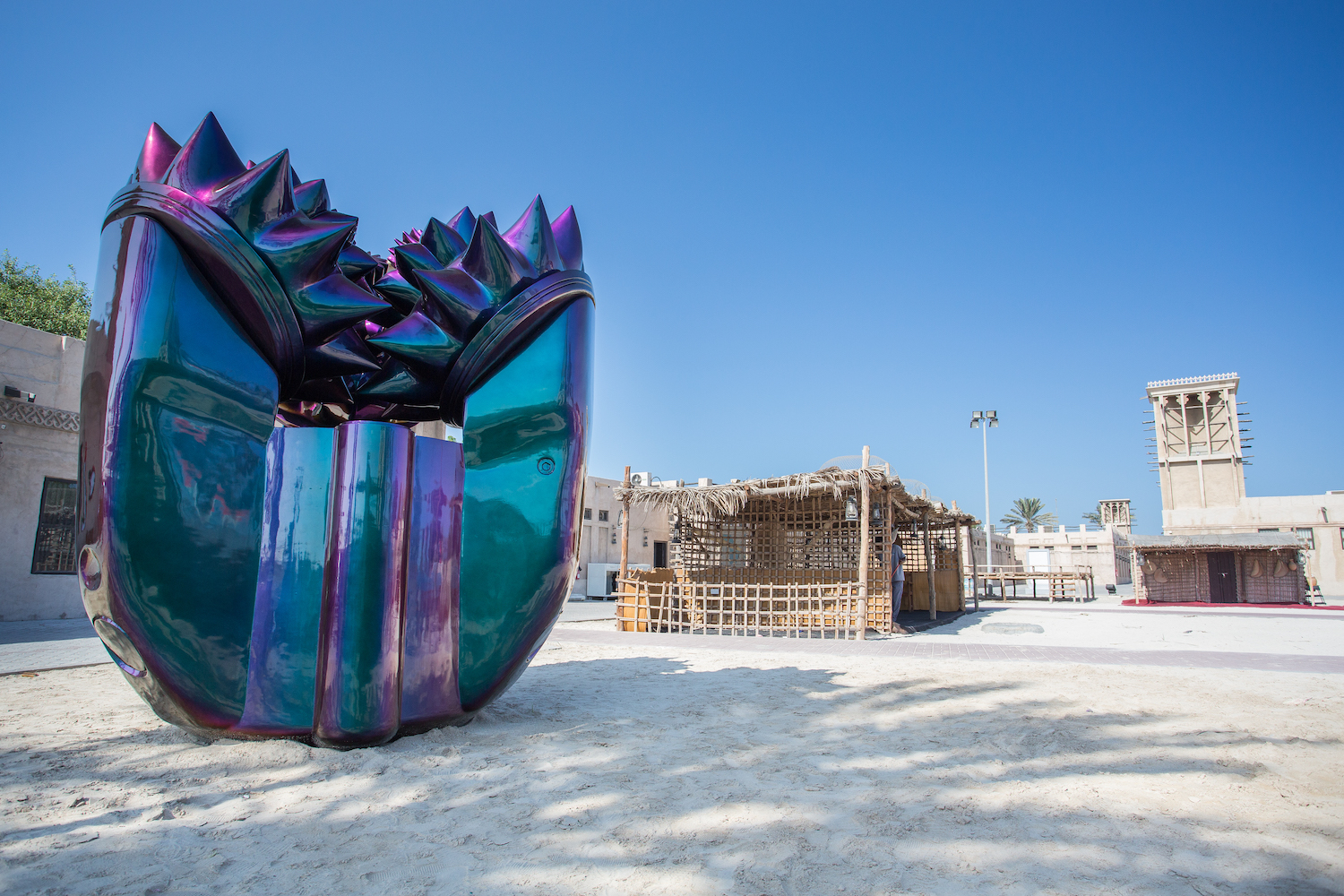
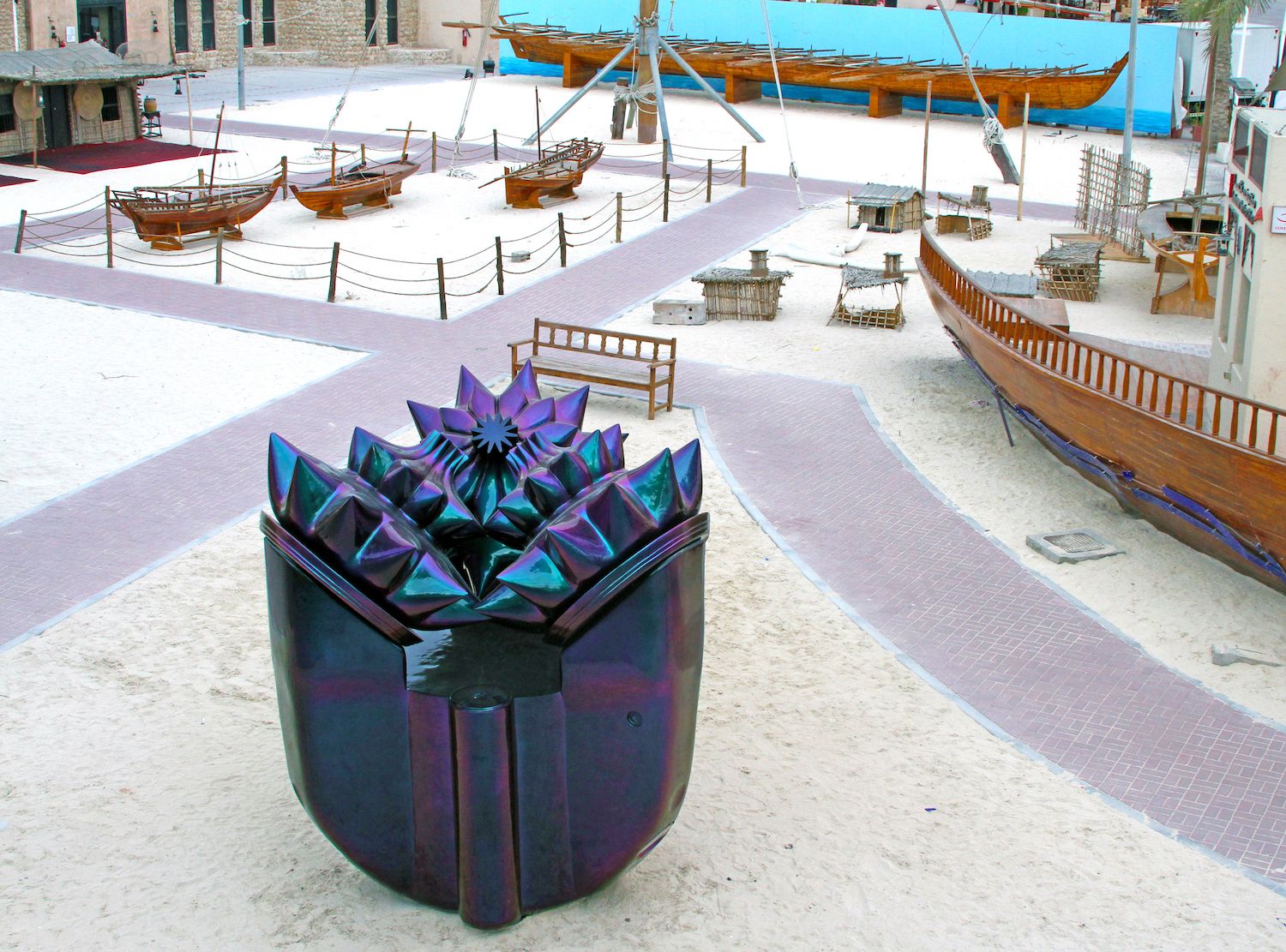
In my other works, I make sculptures of oil drills that look almost like jewellery or octopuses. They look like marine creatures. They’re really beautiful things.
“As soon as you know that this is a fossil fuel that comes from a specific deposit in the earth’s crust and that you have to drill and it’s a really messy operation, then you suddenly also understand the fragility of it.”
MAQ: Yes. Also aliens. I paint them with these pearly, oily colours. I imagine also that in the future, nobody will know what these things are anymore, that it will become some relic from an older time and that people will start to imagine that maybe this was a crown used in a ritual of sorts. As soon as you remove it from that context, it becomes this beautiful object that’s no longer a machine that destroys the earth.
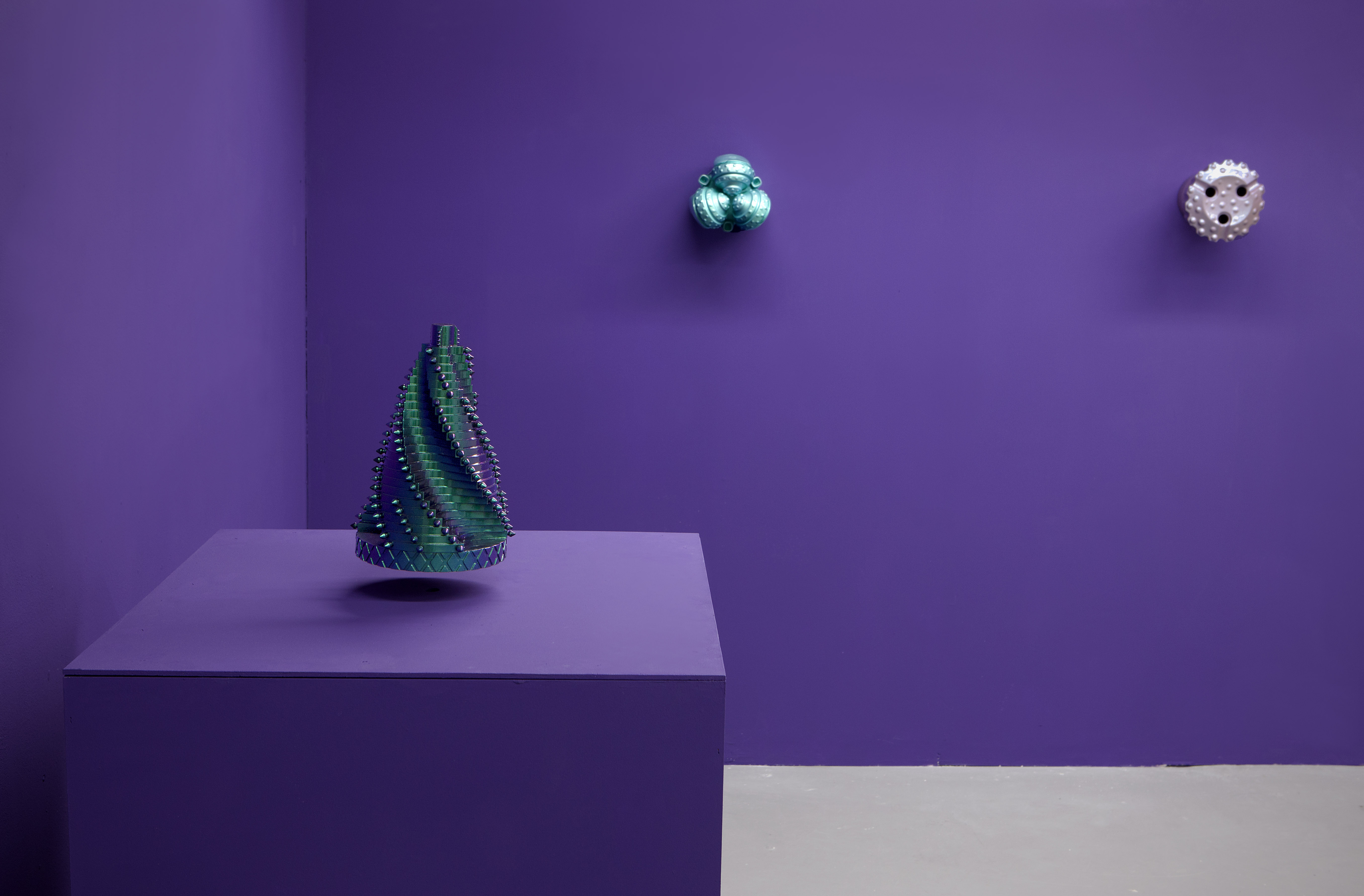
MAQ: Yes, the diamonds and the gold are hard materials that help drilling, so the drills really end up resembling jewel-like objects. I was really shocked when I discovered them when I was doing research about my grandfather, and that as a Kuwaiti, I know nothing about them. Why had I never seen them? This was a very shocking discovery for me, because in reality this was such a central industry to our lives.
Kuwait is 90 percent dependent on oil, and we don’t know anything about the mechanisms of its extraction. It was really a shocking moment for me. As soon as you know that this is a fossil fuel that comes from a specific deposit in the earth’s crust and that you have to drill and it’s a really messy operation, then you suddenly also understand the fragility of it. I think that’s the main issue—that the powers-that-be don’t want to show us how fragile and unsustainable this industry is.
MAQ: Yes, exactly. Oil is a curse and also a miracle. I mean, it’s a strange material. That’s why I call it an alien, because it’s inside everything. It’s not just fuel. It’s the petrochemical industry, which creates plastics and we couldn’t even perform a single surgical operation without hundreds of plastic objects. It’s even inside our bodies.
Also, as a Kuwaiti, I just feel like it’s part of who I am. Oil has created this freak generation that’s not going to last very long, this post-oil generation. I feel like it’s part of my blood.
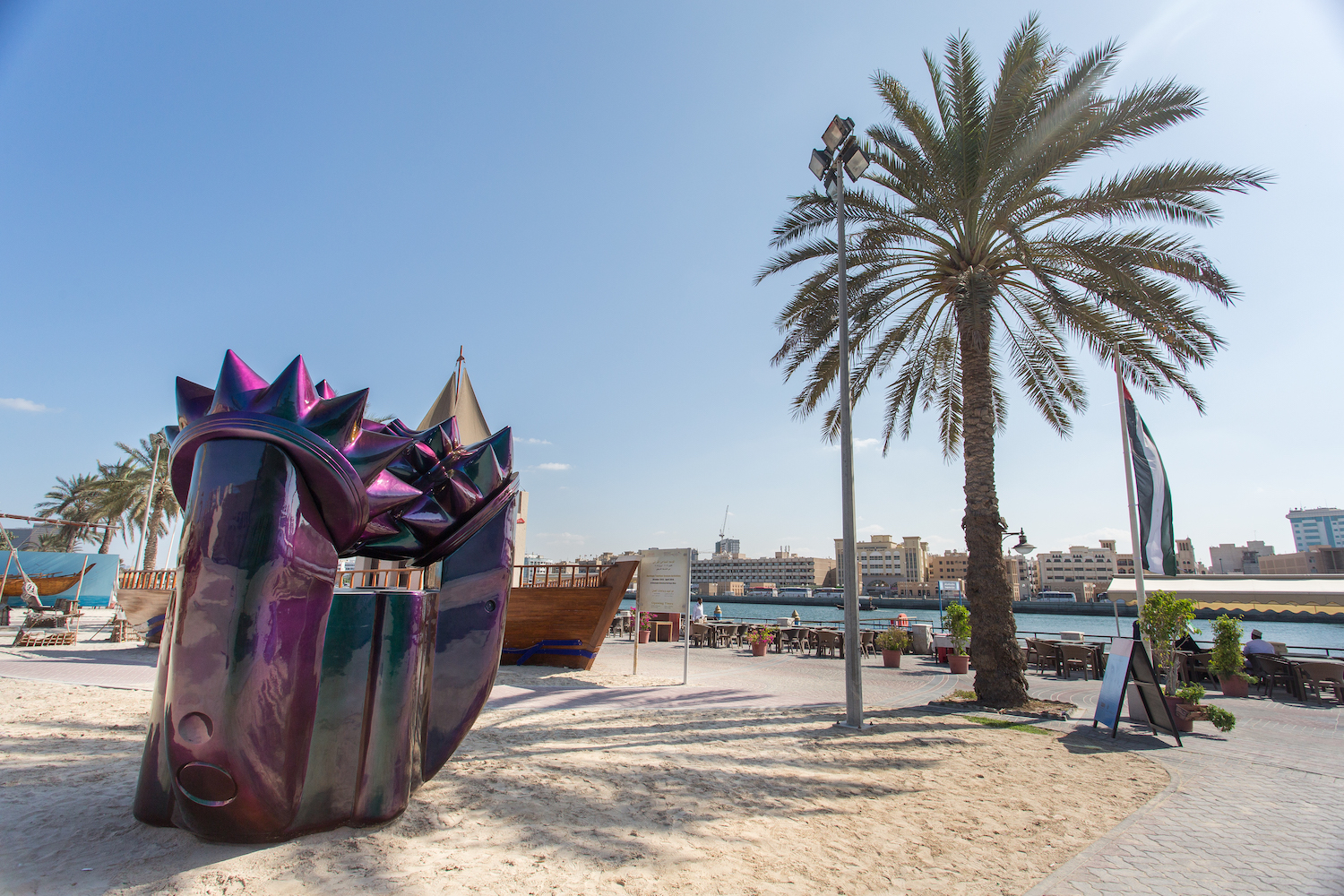
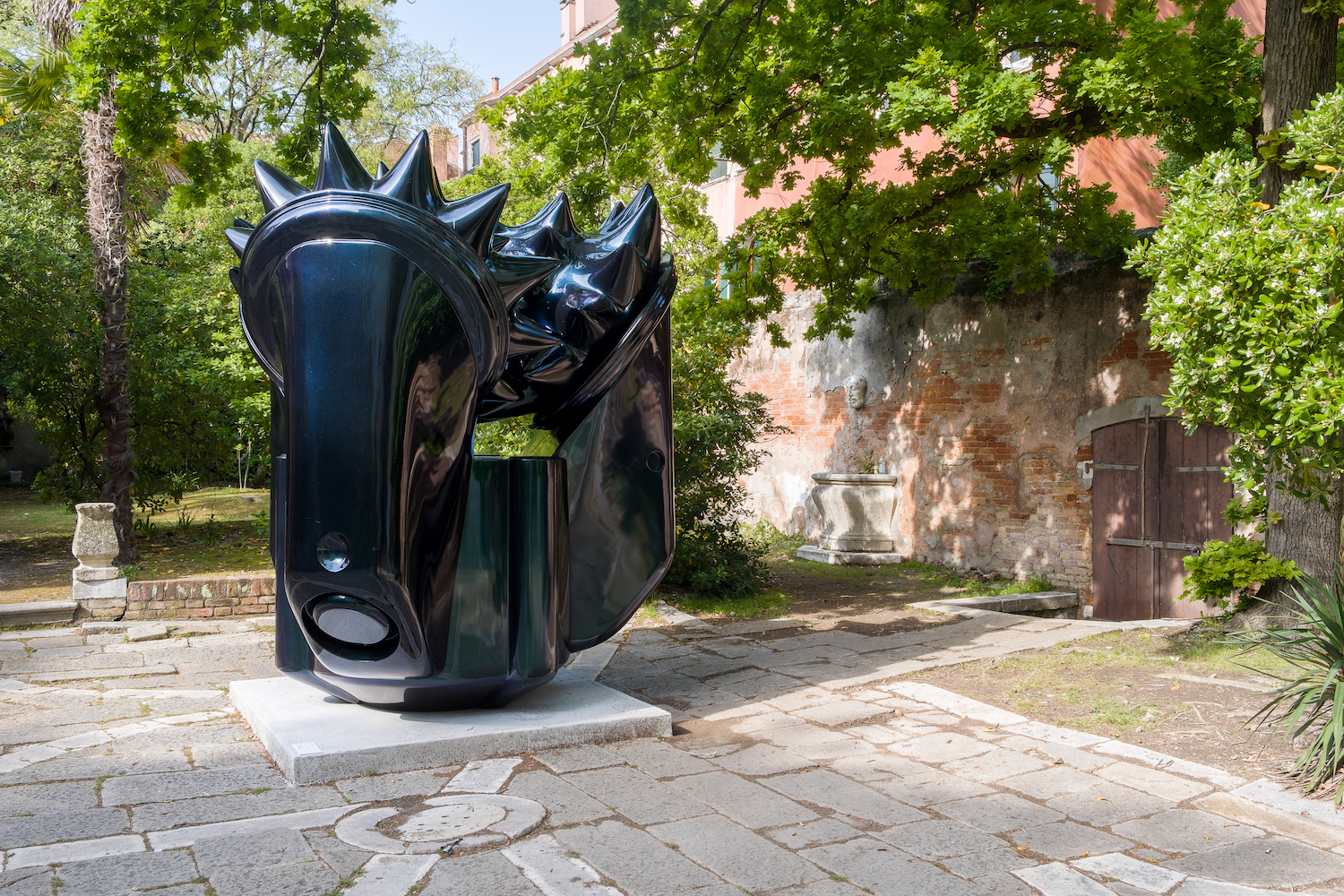
Actually the second work about oil that I made, Alien Technology, was this giant public sculpture of an oil drill in Dubai, placed next to pearl-diving boats. It’s in a heritage village and the pearl-diving boats are actually these fake ones made for touristic consumption. So I made this public sculpture of a drill there. I felt that the drill was a self-portrait. It’s a representation of who I am, placed next to the boat, which is my grandfather.
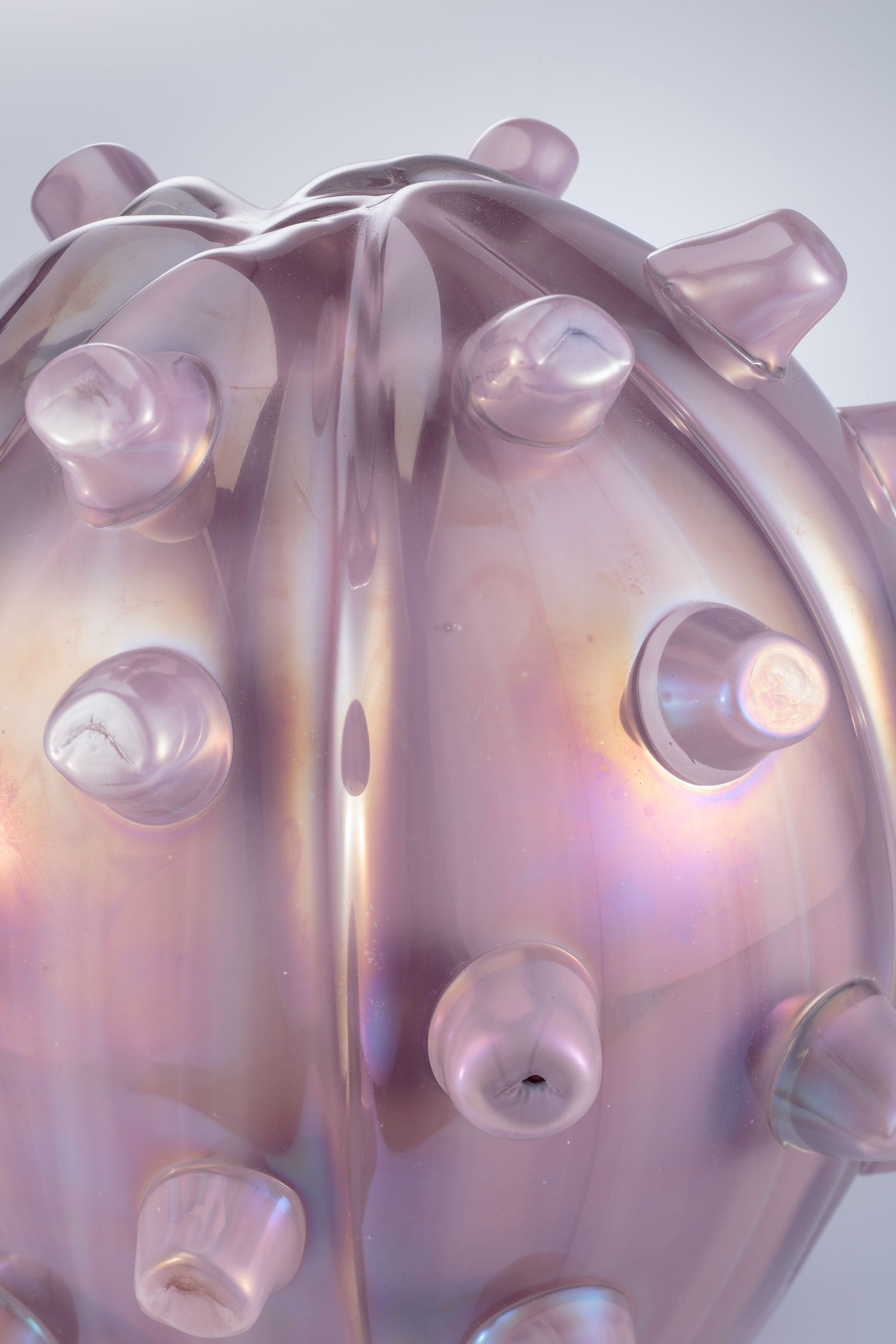
MAQ: I’m trying to look at them from a perspective in the future, when they’re not used in this destructive way and they’re just disused trash of the past. But I’m beautifying them with these colours to make them alluring and seductive, in a way that oil wealth is also alluring and seductive.
It’s very tempting, even if you’re told that this is an environmentally destructive and harmful substance, people are always seduced by the wealth that it can bring.
I think that, in the Gulf especially, we’re in this endless loop of knowing the reality of oil and that it’s not going to last, but that the wealth it brings is always feeding this illusion of being grand and important and powerful. It’s an endless cycle of being seduced by wealth and greatness and what wealth can bring. It’s really like the Tower of Babel. If you get too high up, you’ll be struck down. I’m always trying to preempt that, because not a lot of people are talking about it.
Now, the discussion has changed a little bit because the price of oil has collapsed since 2014 and it hasn’t really gone back up yet, especially now with the pandemic, it’s really hit rock bottom. I’m glad this is happening. This had to happen someday, in order to stop all the conflicts associated with the substance as well.
I always imagine it’s like the monolith in the beginning of 2001: A Space Odyssey (1968). It just landed there and then you touched it and your body changed, but then, like an alien, it will also leave again and your body will go back to where it was.

MAQ: Yes. I’m very obsessed with history, especially since 2011. It’s been a decade since the Arab Spring, and I was very involved in it. I just think that we are somehow lost in that area of the world, the Arab world, because a large segment of history is concealed from us, especially modern history, by undemocratic regimes.
Because you do not know your history, you feel lost, in a way. You cannot see the future if you do not know the past. So my work is always trying to address this hole in history. It’s just difficult not to be able to delve into certain narratives that created this place and you as a person as well.
MAQ: Yes, exactly. It’s really a shame that sometimes the only written documents of like, let’s say, early 20th-century daily life in the Gulf come from colonial sources. Because a lot of the history in that area is oral history and orally narrated. But these documents, written casually in a diary or blog form about life at the time, are by British and European and Australian explorers who went to Yemen and Kuwait and Saudi Arabia and wrote about their daily comings and goings.
It’s strange that those are the only documents that allow us to access certain parts of our history that we don’t know anything about. I find it very tragic. I mean my work is a lot about the aesthetics of sadness, and this tragic element is a very important part of what I do. I also think of the drills as a very tragic subject. It’s a portrait of myself as a machine. There’s something very unsettling about that.
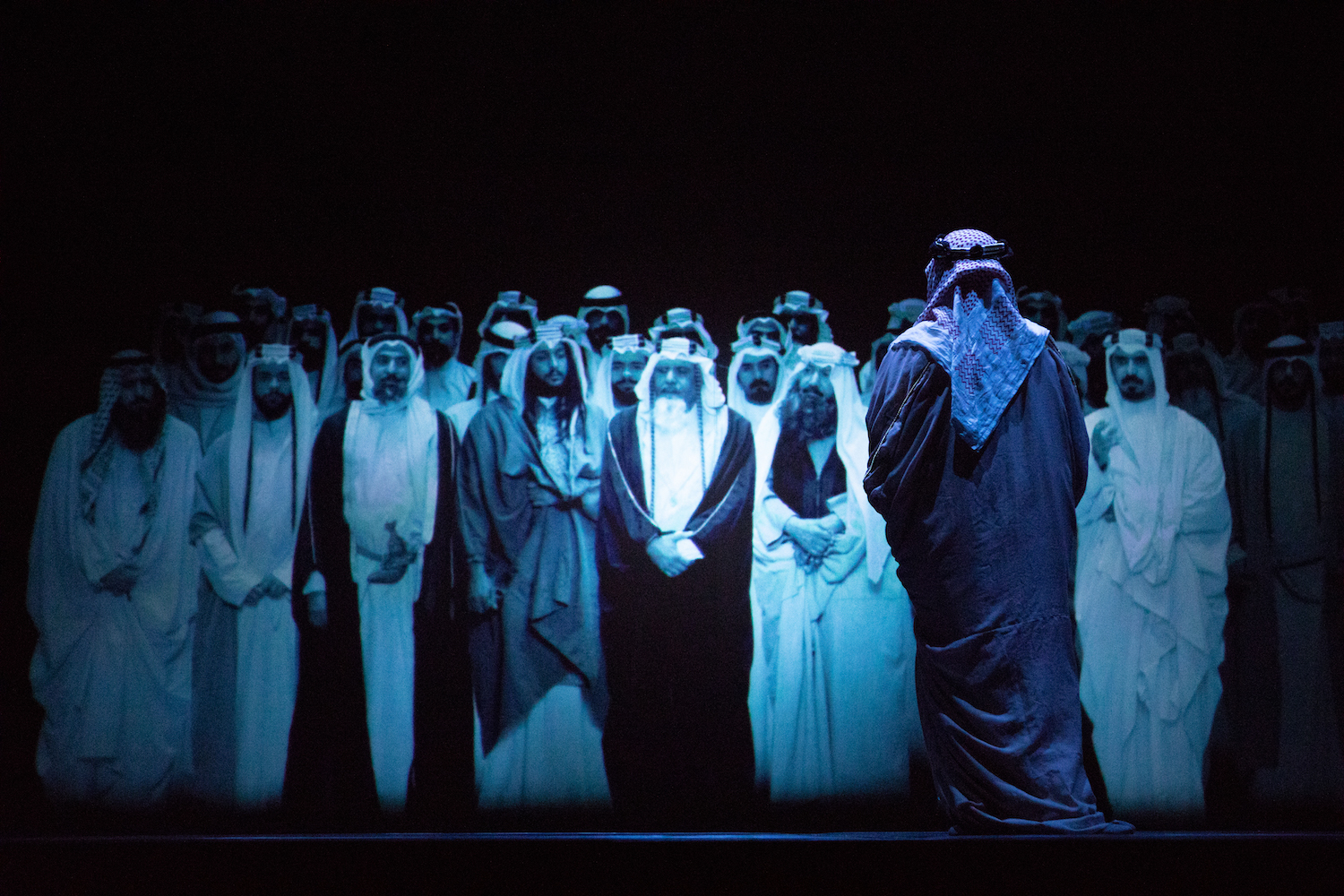
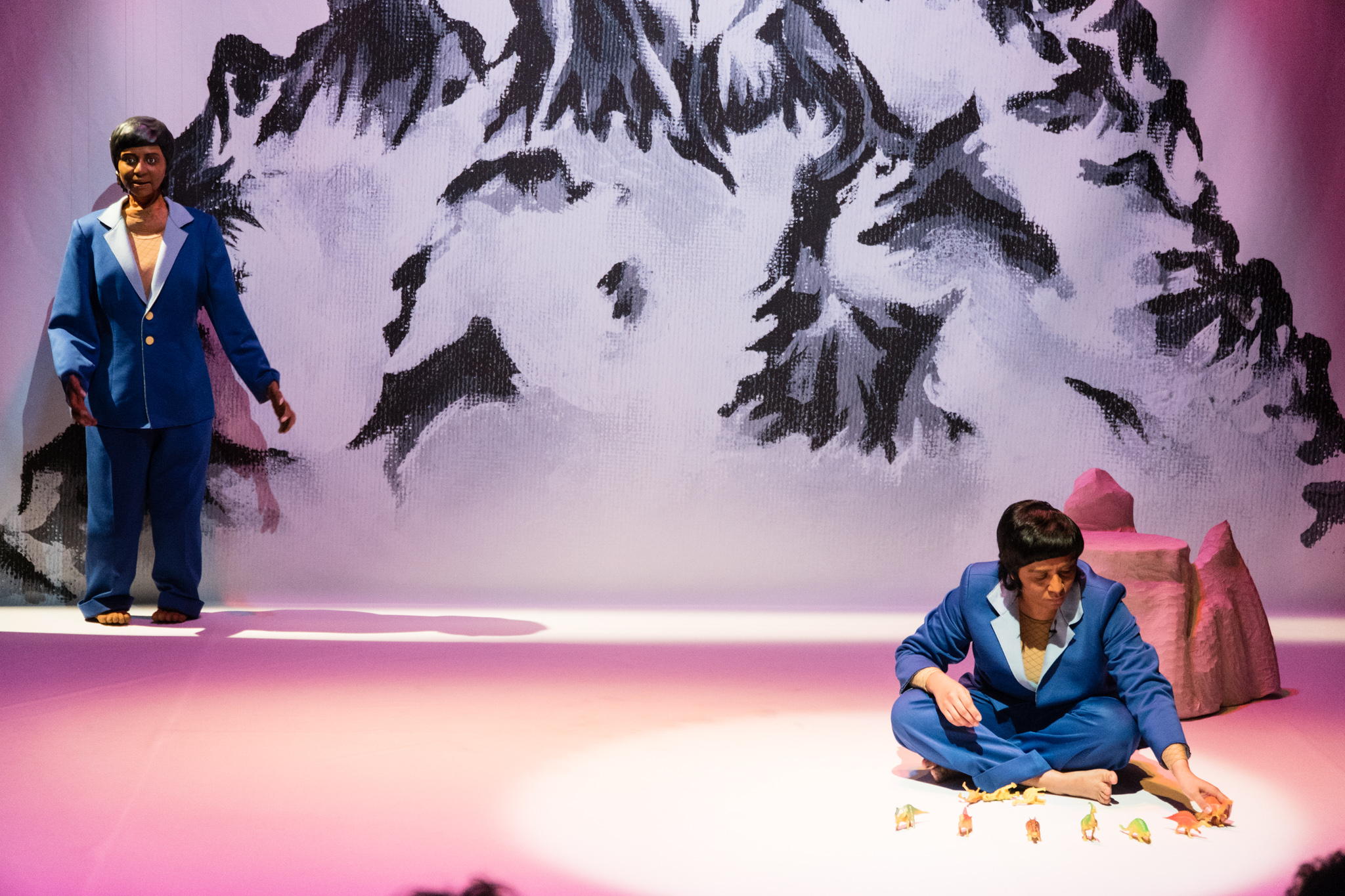
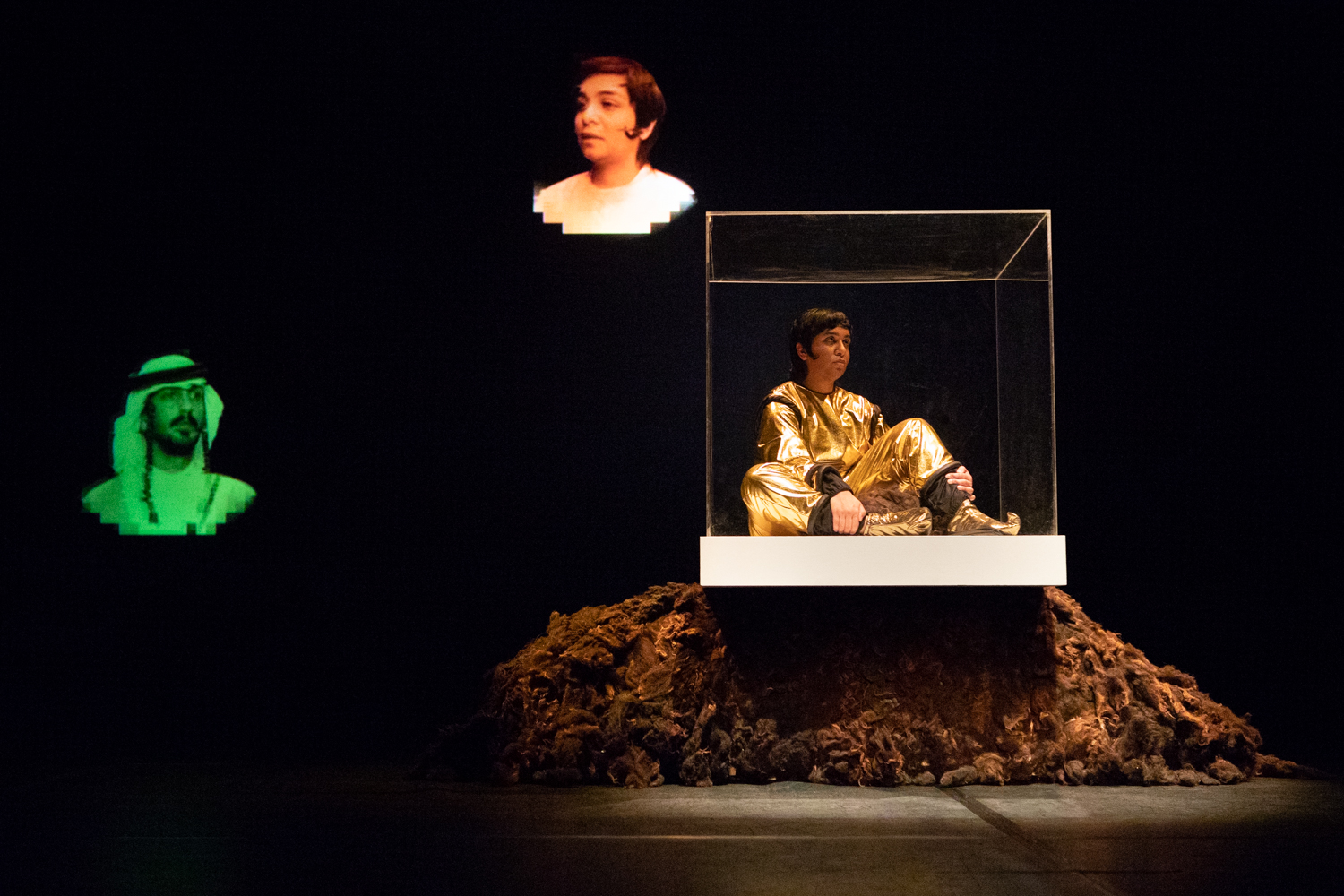
MAQ: Yes, of course. I have a theatre piece I made recently called Phantom Beard, in which I speak to the ghosts of my ancestors, who were killed in a massacre.
I met a ghost reader in Japan, and she told me that there are 40 men attached to my body as ghosts. They had a terrible life full of blood and they think that I’m the chief of the tribe and they want to enjoy life with me. So I made this theatre play where I would see them on stage, projected as videos, and I would speak to them. It’s a work about creating alternative histories, rediscovering the past, and reliving tragedy.
MAQ: I think everyone living on planet earth today is affected by oil in some way or another. If you’re not an oil-producing country, you’re an oil-consuming country for sure. A huge part of society and the way it’s built and the products that you use are oil-based. There are some small attempts to not use oil-based products, and I’m very happy people are becoming more aware and conscious of that, but on the larger scale of things, it’s very much integral to who we are as people in the modern world.
We really have to think about it and consciously find ways to disassociate ourselves in a positive way, but also admitting that it’s there is very important. For example in Canada, there is a lot of fossil fuel extraction going on right now. It’s causing destruction and pollution and I know there’s a big movement against it. I think it’s happening everywhere.
I was very interested how these histories can intersect in this moment where this is going on in that place. It’s a worldwide problem that we have to deal with. —[O]




A respected voice in contemporary art discourse.
Focusing on ambitious storytelling and insightful art-world commentary. Ocula Magazine publishes in-depth interviews, critical essays and timely analysis on the artists, exhibitions and ideas driving the global art world.
Learn more about Ocula Magazine
Showcasing the best of the art world.
Ocula partners with galleries from around the world to highlight their artists, artworks and exhibitions. Gallery membership is by application and invitation, with each member vetted by an independent panel.
Learn more about Ocula Membership
Specialises in the sale of major artworks.
Led by a team with deep ties to the world’s leading auction houses, galleries and collectors. Ocula’s advisory team offers bespoke services to high-net-worth clients from around the world who are looking to acquire the best of contemporary and modern art.
Learn more about our team and services